














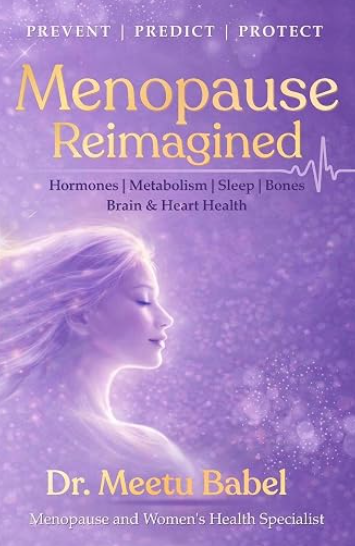
Menopause is a natural stage of life, yet many women continue to navigate it with unanswered questions, confusion, and limited awareness. From hormonal changes and bone health to sleep, metabolism, and emotional wellbeing, menopause affects far more than the end of menstrual periods. Understanding menopause symptoms and their impact on women’s health is an important step towards helping women make informed decisions about their wellbeing.
In Menopause Reimagined, a menopause specialist highlights the importance of menopause awareness, early preparation, and a holistic approach to women’s health. Inspired by a deeply personal experience with her mother and shaped by years of working with patients, the book aims to make medical knowledge accessible and help women better understand the physical and emotional changes they may experience during midlife.
In this interview, we explore the inspiration behind Menopause Reimagined, the gaps in menopause awareness in India, and why women deserve better information, understanding, and support during this important stage of life. From challenging common menopause myths to discussing bone health, hormonal changes, and the role of families and workplaces, this conversation examines how awareness can transform the way women approach menopause and long-term health.
1. What inspired you to focus on menopause?
My greater understanding of menopause did not begin in a clinic. It began at home with my mother. Her periods stopped permanently at just 39. I was already a gynecologist, but I didn’t fully understand then what decades of estrogen loss could mean. At 60, she developed severe osteoporosis and vertebral fractures with chronic pain.
That was my awakening.
I realised that if this could happen to my mother, even in a family of doctors, how many women were going through menopause without awareness? That became the inspiration for Menopause Reimagined.
“Your mother’s experience offers a deeply personal starting point for a conversation that so many women need to have.”
2. What gaps did you notice in how menopause is understood, especially in India?
The biggest gap is awareness.
Women often hear, “It’s just age,” or “Everyone goes through it.” But menopause is much more than periods stopping. It can affect bones, muscles, metabolism, sleep, brain, heart, sexuality, and emotional wellbeing. I wanted women to move from simply tolerating menopause to understanding and preparing for it.
“That’s an important point. Menopause may be natural, but understanding its impact can help women navigate it with greater awareness and confidence.”
3. What were you most mindful of while writing the book?
I wanted to write the book I wish I could have given my mother when she was 39. I wanted it to be scientifically accurate but simple, compassionate and relatable. My aim was not to frighten women about menopause, but to prepare them.
Unawareness creates fear. Awareness creates preparation.
“The focus on making medical information accessible and reassuring ensures that women feel informed and prepared rather than overwhelmed by the changes menopause brings.”
4. How much of the book comes from your patients?
My mother gave me the awakening, but my patients gave the book its many voices.
Every woman comes with a different concern, such as weight gain, poor sleep, brain fog, intimacy, mood changes, or bone health. Their stories taught me that menopause doesn’t have one face. But one pattern kept repeating: The body was changing. The woman was confused. Information brought clarity.
“These experiences highlight how every woman’s journey through menopause is different, making personalised understanding and reliable information essential.”
5. How did you make the medical information accessible?
I kept imagining a woman sitting across my consultation table.
I asked myself, “How would I explain this to her?”
So I simplified the language without compromising the science. For me, making medicine simple is not making it superficial; it is making knowledge usable.
“That’s a valuable approach to health education: making complex medical information easier to understand and apply.”
6. How do you view menopause holistically?
Menopause is a whole-body transition, not simply the end of periods.
It can affect bones, muscles, metabolism, sleep, brain, heart, intimacy and emotional wellbeing. And midlife often comes with multiple responsibilities: children, ageing parents, career and relationships.
So we need to care for the woman as a whole, not just treat her symptoms.
“This broader perspective reminds us that menopause care needs to consider both physical health and the realities of women’s lives.”
7. What misconceptions do you want women to unlearn?
That menopause is only about hot flashes. That weight gain is simply lack of discipline. That nothing can be done. And perhaps the biggest misconception: “This is just ageing. You have to tolerate it.”
Menopause is natural, but unnecessary suffering and unawareness are not. And my mother’s story taught me that feeling well does not always mean everything is well.
“Challenging these assumptions is an important step towards helping women seek information and support without dismissing their concerns.”
8. How can families and workplaces support women better?
Start by talking about menopause without embarrassment. Women don’t need pity. They need understanding, communication and support. Families should understand that some changes may have a biological component, and workplaces should create an environment where women can discuss genuine health concerns without shame.
“A more open conversation at home and at work could make it easier for women to speak about menopause and seek the support they need.”
9. How did you decide what to include in the book?
I wrote for the woman who doesn’t know what she doesn’t know. I wanted to answer the questions women already ask about: weight, sleep, hot flashes and mood, but also introduce issues they may not realise they need to think about, such as bones, muscles, heart, brain and metabolic health. I didn’t want women to simply know more. I wanted them to think differently about their health.
“Looking beyond familiar symptoms can encourage women to take a more informed and proactive approach to their overall health.”
10. What did the journey from manuscript to publication mean to you?
This book is deeply personal because it carries my mother’s story, my patients’ experiences and my journey as a menopause specialist.
Once published, it stopped being only my story. It became a conversation with every woman who reads it. And if my mother’s experience can help another woman prevent a health crisis, then her story has found its purpose.
My mother was the reason I opened this conversation. I hope every reader helps me keep it open.
“It’s moving to see how a personal experience can become a resource for other women.”
Menopause is a natural life transition, but understanding it should not be a privilege. As this conversation highlights, greater menopause awareness can help women recognise changes in their bodies, ask informed questions, and make informed decisions about their long-term health.
Through Menopause Reimagined, the author brings together personal experience, insights from clinical practice, and a commitment to making medical knowledge accessible. The message is clear: menopause deserves informed conversations, compassionate care, and a more holistic understanding of women’s health.
Whether it is learning about bone health, understanding hormonal changes, challenging common menopause myths, or creating more supportive spaces at home and at work, every conversation can be a step towards greater awareness. Recognising that menopause affects more than menstrual periods can also encourage women to discuss their concerns with qualified healthcare professionals and explore appropriate care.
If you are looking to understand menopause better or support a woman navigating this stage of life, Menopause Reimagined invites you to look beyond common misconceptions and approach menopause with knowledge, understanding, and preparation.
Because every woman deserves to understand her body, make informed choices, and feel supported through every stage of life.