













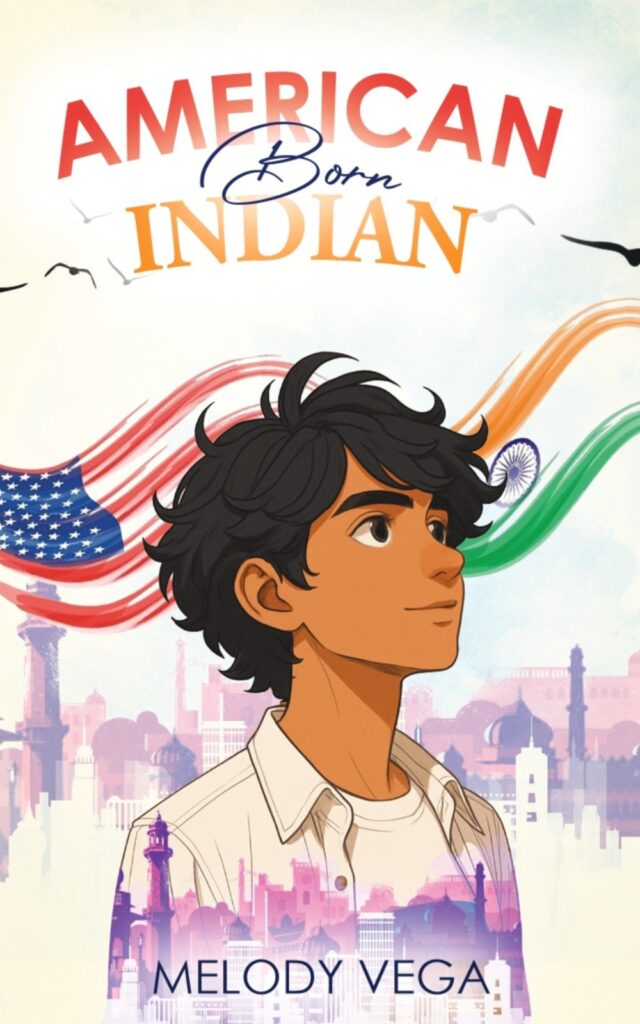
The “American Dream” is a narrative we’ve heard a thousand times – the story of leaving home for the land of opportunity. But what happens when the journey goes in the opposite direction? What happens when a teenager rooted in American culture is suddenly transplanted into the vibrant, chaotic, and complex heart of Bangalore?
Today, we’re sitting down with the brilliant young mind behind American Born Indian. At just thirteen years old, she began crafting a story that explores the friction between two identities, the struggle to belong, and the universal hurdle of growing up. Let’s dive into her journey of flipping the narrative and bringing Jay’s world to life.
1. What inspired you to flip the narrative from American Dream to, supposedly, the Indian narrative?
Around the time I came up with the idea of American Born Indian, I was chatting with family friends who lived in America about how different both countries are, and the ensuing culture shock. It made me think that if we Indians believe America is vastly different from us, surely Americans have the same wonder about our culture. The spark grew from that realization into this question: what if a teenager moved from one such country to another, and he’s not really belonging in either one? How is he dealing with the culture clash? How is his identity and life being challenged because of it? That’s how the story took root in my mind.
“That is such a fascinating “what if” to start with. “
2. How did you write about both the aspects of the protagonists’ lives- American and Indian? Did you have any outside help?
Jay’s American life is, vibes-wise, inspired from a lot of American middle-grade contemporary novels (confession: I’ve never actually gone to the US), but his Indian life is a mix of fiction and some of my own experiences and other things around me – most of the locations in the book, for example, reference real-life places in Bangalore itself.
“It’s impressive how you used “vibe-checks” from literature to construct his American background! Using real-life Bangalore locations must give the book such a authentic feel for readers familiar with the city.“
3. Does any part of Jay’s story resonate with yours, or is it purely fictional?
While it’s a purely fictional story, some of the struggles Jay deals with , not just about his identity but also in his teenage life – resonate with me greatly. His doubts about belonging and finding his true self is something I think everyone can relate to, regardless of their background and culture.
“Absolutely. Whether we move across the world or just move to a new school, that “universal” feeling of wondering where we fit in is something that hits home for all of us.“
4. How long have you been writing, and what made you choose Jay’s story to bring out to the world?
I’ve been making up stories in my head since I was in first grade, but I only started seriously thinking about writing when I was in middle school, that’s when I started a blog to share some of my stories and poems. Jay’s dilemma about the culture clash is the kind of interesting situation I’ve always wanted to see in stories, and it’s also something that would resonate with many immigrants and bi-cultural kids in general. That compelled me to bring his story out to the world.
“It sounds like you were born to be a storyteller! It’s wonderful that you identified a gap in the stories available for bi-cultural kids and decided to fill it yourself”.
5. Apart from his geographical and cultural struggles, did you dive into the emotional aspects of juggling between two cultural identities?
Jay’s emotions about moving from America to India are running at an all-time high. He’s confused, angry, and wondering if he’ll ever fit in. He’s worried about which of the two sides will win this identity battle, so to speak. And he’s just a kid, so these struggles thrown in with growing up makes him feel like the whole world is on his shoulders. It gets really emotionally and mentally taxing for him as the book progresses.
“The “identity battle” is such a heavy weight for a teenager to carry. It’s clear you didn’t shy away from the raw, messy emotions that come with such a massive life transition.“
6. The book also has humor mixed with grave issues of our society. How did you balance writing both without losing their meaning?
I have to thank a lot of middle-grade contemporary fiction authors for that—their books became my blueprint for juggling sensitive issues along with enough humour and heart to make the story funny and poignant. American Born Indian doesn’t just solely focus on Jay, but expands to show the lives of other people around him – his mom, his grandmother, and especially his best friends. They’re all dealing with deeper and more complex problems, and the book shows how much of an impact Jay’s presence makes in their lives as they do in his.
“Balancing humor and gravity is a tough act, but it sounds like you’ve created a rich ensemble of characters that help carry that load. It’s lovely to hear how Jay affects those around him, too“.
7. Did you ever face writer’s block while writing this? If yes, how did you pass through it?
The writer’s block was not as crippling as one would expect. Planning the chapters a bit ahead of time really helped for outlining, I wrote a tentative chapter name and gave a one-line summary of what was going to happen, like the episode previews in a Netflix show. That gave me room for a lot of freedom with the character-driven plot, and also helped me avoid such mental blocks for long periods of time.
“I like the “Netflix preview” strategy! That is a fantastic tip for any writer struggling to see the path forward.“
8. What was the most difficult part of writing a character like Jay? Did his hybrid identity trouble you, or was it easy to pen down?
The only thing Jay and I have in common is our age. I was also thirteen when I began writing American Born Indian. So his thoughts, fears, and feelings that come with reaching that point in life were easy to pen down writing him almost felt like an outlet for my own emotions. But I do think his evident Americanness in particular at the beginning of the book was perhaps the most difficult part to write, connecting it to his hybrid identity as a whole. Other challenges also included representing his queer identity realistically and building up his relationships with the adults in his life, his mom and his grandmother.
“It’s a brave task to navigate queer identity, cultural displacement, and intergenerational relationships all at once. Your commitment to representing those layers realistically is what makes characters feel like real people”.
9. Was this book a one-and-done for you, or are you just starting your author journey?
Nope, I’ve only just started! I’ve always wanted to be an author since middle school. Going further ahead, I want to focus on contemporary Indian teen experiences as a whole and try countless other genres something I learned during publishing is that most Indian middle-grade and YA fiction is really under-appreciated and unheard of, and I hope to help change that through my work.
” It’s exciting to hear that this is just the first chapter of a much longer career.“
10. How was your publishing experience? Do you have any advice for writers like you who wish to one day get their story out?
Absolutely great! The entire team was quite prompt, and their work is impeccable. They were also patiently answering all of my questions about the process and resolving my doubts for a teen who’s publishing her first book, I could fall back on their guidance as we worked on bringing American Born Indian out into the world.
As for the other aspiring authors out there: you have the best and most important job in the world to make people feel seen. Believe that you were born for this. Someone out there can’t wait to hold your work in their hands, and it will become their favourite thing in the world. Keep reading and writing and always, always inspiring others and yourselves.
“What a powerful note to end on. “To make people feel seen” – there truly is no higher calling for a writer.”
Speaking with the author of American Born Indian has been an inspiring reminder that age is no barrier to depth and perspective. By tackling the complexities of “the return” to India with humor, heart, and a keen eye for cultural detail, she is paving the way for a new generation of Indian YA literature.
Whether you are navigating your own “identity battle” or simply looking for a story that captures the spirit of modern India through a unique lens, this is a book – and an author, you’ll want to keep on your radar.
Grab your copy of this fascinating story and dive deep into the world of feeling of indifference.