













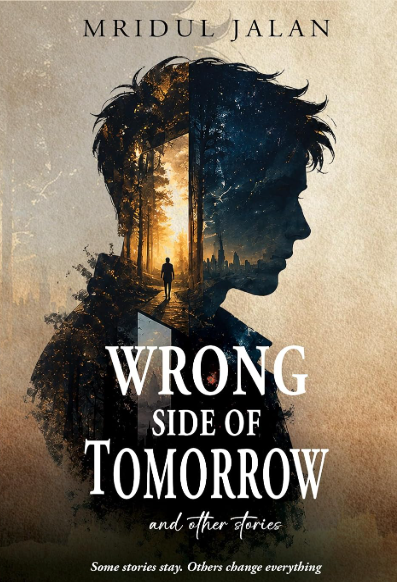
What happens when twelve different ideas, twelve different worlds, and countless possibilities come together in one collection?
A short story can begin with something as simple as an everyday moment, a “what if?” question, or an idea about the future. From there, it can take an unexpected turn, challenge what the reader expects, and leave them thinking long after the final line.
This collection brings together twelve distinct stories, each offering its own atmosphere, ideas, twists, and possibilities. From technology and imagined futures to ordinary moments viewed from a different perspective, the stories reflect a curiosity about what could happen when imagination takes the lead.
In this conversation, we explore how the stories were selected, where the ideas come from, the influence of technology, gaming, chess, and strategy, and the experience of turning twelve ideas into a first published book with Paper Towns Publishers.
Q1. With twelve very different stories in this collection, how did you decide which ideas made the final cut?
Honestly, I had quite a few ideas, but I chose the ones that I felt were the most interesting and different from each other. I wanted every story to have its own feel, so the reader wouldn’t feel like they were reading the same kind of story twelve times. I also wanted to include stories with twists and ideas that would make people think.
“That variety seems to be an important part of the collection and With each story having its own identity, it sounds like the book gives you the freedom to explore very different kinds of ideas.”
Q2. Some of these stories explore the future, others explore very ordinary moments. What draws you to both extremes?
I just like imagining different possibilities. Sometimes I think about the future, technology, or things that don’t exist yet, and sometimes a normal situation can give me an idea for a story. I think even an ordinary moment can become interesting if you look at it in a different way.
“That ability to find possibilities in both futuristic concepts and everyday situations creates a lot of room for unexpected storytelling. And when you are working with possibilities, sometimes the story itself can take an unexpected direction.”
Q3. A few stories deal with the unknown and unexpected turns. Can you tell us about one story that surprised even you as you were writing it?
There have been times when I’ve started writing with one idea in mind and the story has gone somewhere completely different. That’s actually one of my favourite parts of writing. Sometimes the twist isn’t something I planned from the beginning, and I end up surprising myself too. I don’t want to give away the story, though!
“Fair enough we definitely don’t want to give away the surprises! But it is interesting that some twists can emerge naturally during the writing process. That element of surprise seems especially suited to the short-story format.”
Q4. Short stories are a very different challenge from a novel you have to build a world and wrap it up quickly. What do you enjoy most about working in this format?
I like that short stories let me explore a lot of different ideas without having to spend hundreds of pages on one. You have to get to the interesting part quickly, which can be challenging but also fun. I especially enjoy trying to make the ending something the reader doesn’t see coming.
“That balance between being concise and still creating an impactful ending must make short stories particularly exciting to write.”
Q5. Is there one story in the collection that feels the most personal to you, or one you’re most proud of?
I don’t think I can pick just one because every story has something different that I like about it. I’m probably most proud of the stories where I had an idea that seemed simple at first, but I was able to turn it into something much bigger. Seeing all twelve stories together as one book is probably what I’m most proud of.
“That makes sense the pride may not come from one particular story, but from seeing all those individual ideas finally come together as a complete collection and Your interests outside writing also seem to play a role in how those ideas develop.”
Q6. You mention being interested in technology, gaming, and envisioned futures. How much of that interest shows up directly in these stories?
Quite a lot, I think. Technology and gaming are things I enjoy, so they naturally influence the way I come up with ideas. I also really like thinking about what the future could look like. Sometimes those interests become an actual part of a story, and sometimes they just influence the way I think about the story.
“It sounds like those interests influence the stories both directly and indirectly not just what you write about, but also how you approach an idea And when it comes to thinking ahead and anticipating possibilities, another interest seems particularly relevant.”
Q7. Chess and strategy games often involve thinking several moves ahead. Did that kind of thinking influence how you plotted the twists in these stories?
Yes, definitely. Chess has made me think more about what could happen next and what different choices could lead to. I think that helps when I’m planning twists because I like thinking about what the reader might expect and then finding a way to change that expectation.
“Anticipating what someone expects and then deliberately shifting that expectation can make a twist much more satisfying. But before the twists and plots take shape, every story has to begin with an idea.”
Q8. Where do you usually find inspiration for a new story — is it something you observe in daily life, or does it come more from imagination and “what if” questions?
It’s probably a mix of both. Sometimes something completely normal can make me think of a story, but a lot of my ideas start with a “what if?” question. Once I get an interesting idea, I just keep thinking about what could happen next until it starts turning into a story.
“It seems that curiosity is at the heart of your writing taking a simple observation or a “what if?” and following it wherever it leads.”
Q9. If a reader could only pick one story from this collection to start with, which one would you recommend, and why?
I’d probably recommend starting with Stuck in Amber. I think it gives a good idea of the kind of stories in the collection and has suspense and unexpected moments that I really enjoy writing. Also, I think it would make the reader curious about what the other stories are like.
“Stuck in Amber sounds like a fitting introduction to the collection, especially if it captures the suspense and unexpected turns that run through your writing.”
Q10. How has your journey of bringing this book to readers with Paper Towns Publishers been, and what has the experience taught you as an author?
It’s been a really exciting experience, especially because this is my first book. There was a lot more to publishing a book than just writing the stories, and I’ve learned a lot throughout the process. It has taught me to take my writing more seriously, accept feedback, and keep improving. Most importantly, it showed me that an idea can actually become a real book if you work on it and don’t give up.
“It sounds like publishing your first book has been a learning experience beyond just writing the stories. From developing an idea to accepting feedback and seeing the finished book in the hands of readers, the journey seems to have shown you what it truly takes to turn an idea into something real.”
Twelve stories can mean twelve different worlds, twelve different possibilities, and twelve different ways of looking at what could happen next.
What connects this collection is not simply the variety of its stories, but the curiosity behind them—the willingness to ask “what if?”, explore unexpected possibilities, and take an idea somewhere the reader may not expect.
From everyday observations to imagined futures, from gaming and technology to the strategic thinking of chess, these influences come together to create a collection built around imagination and surprise.
And perhaps the biggest takeaway from the journey is simple: an idea does not have to remain an idea. With curiosity, persistence, and the willingness to keep improving, it can eventually become something real a story, a collection, and ultimately, a book.
Ready to discover where twelve stories can take you? Pick up your copy of Wrong Side Of Tomorrow And Other Stories and begin with Stuck in Amber.