













Some places stay with us long after we have left them. Not necessarily because of how they look, but because of how they make us feel. A sense of comfort, the warmth of familiar faces, and the feeling of finally belonging somewhere.
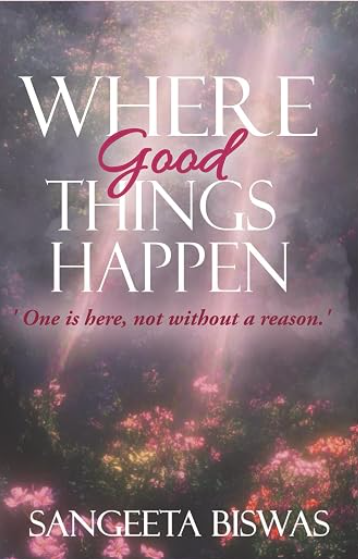
In Where Good Things Happen, the author introduces us to Ekanth, a magical inn nestled in the hills, where happiness, compassion and meaningful relationships find a home. Through its characters and their stories, the book explores the idea that family goes beyond blood, kindness can create lasting bonds, and even life’s difficult moments have something to teach us.
In this conversation, we talk to the author about the inspiration behind Ekanth, the relationships that shaped the story, the meaning of home, and the emotions they hope readers carry with them after turning the final page.
Q. 1 The inn “Ekanth” feels almost magical in how it’s described. What inspired you to create this particular setting, tucked away in the misty hills?
Ans 1. My childhood and school days were spent in the lap of lush green tranquil hills,
where the air was soft and time walked slowly. Then, life with all its commitments pulled me into the hustle and bustle of places far and wide. Years slipped by in that ceaseless cacophony, never quite giving me a chance to return to the peace of those serene mountains. Yet, on tired nights, I often felt a deep yearning for them – a quite call from far away. Childhood and its tender, innocent
memories haunt us all. I am no exception.
‘Ekanth’ was born from that yearning. It is not a place on any map. It is pure imagination – a magical, exotic inn nestled in the rolling hills, basking in heavenly light and quite positivity, where only happiness and good things are allowed to dwell.
“There’s something lovely about the idea of Ekanth being born out of a longing for a place that once felt like home. Perhaps that’s why it feels so inviting. We all have places we wish we could return to, don’t we?”
Q. 2 You write that “family is not always blood.” Can you tell us more about what family means in this story?
Ans 2. Family is not always blood. And blood is not always family. We don’t choose our blood. Blood is an accident of birth. Blood makes you relatives. What I have learned in life is that a family is not always born with you.
Many a time, sheer strangers give you the shelter and protect you and your kindness, when the so called blood try to finish it. These strangers are family then, in the true sense, not by birth but by heart.
I have experienced compassion, understanding and strength in kind souls whom I honor and am always grateful. I have a family beyond my blood who have stood by me when life took sharp bends, with their love and support. In my book the characters too resonate this perspective of life.
“That’s such a beautiful way to look at family. And I think many readers would relate to finding their strongest support in people they weren’t related to by blood. It makes you wonder, what really makes a person family?”
Q. 3 Compassion, empathy, and benevolence are described as central themes. Was there a real experience or relationship in your own life that inspired these themes?
Ans 3. Compassion, empathy, benevolence and many such words are termed Prosocial emotions. These words are not just soft words, they are powerful when used correctly. They are positive social emotions, possibly the very glue that holds the human world together. Without them, we may have families by blood and societies by law, but we will never have belonging. We might have a smart world, a fast and ultra modern world – but not a humane world, not a world where pure
good will exists, where life would just be a breath of fresh air.
“Absolutely. Sometimes, it’s the simplest acts of kindness that stay with us the longest. And perhaps a world that has more empathy is something we could all use a little more of.”
Q. 4 The story is described as unfolding across “peaks and valleys.” Can you share a bit about the emotional journey readers can expect?
Ans 4. Life is nothing but peaks and valleys. Peaks and valleys are not just in the mountains, they are within us. Whenever we feel Joy, Love, Excitement, Gratitude, Pride etc, we are on a peak, when we are at the top of the world. But we cannot stay at the peak always, we have to step foot on the valleys whenever Grief, Lonliness, Guilt etc, knock at our doors. But valleys are not necessarily punishment. They are where the rivers flow and where life grow. While Peaks give us perspective, valleys give us depth. Our lives experience both peaks and valleys. Life teaches us to walk between peaks and valleys without losing our way back home.
“I really like how you’ve put that. We often look at the difficult phases of life as something we simply need to get through, but the idea that valleys also give us depth is quite reassuring. It makes the journey feel a little more meaningful.”
Q. 5 Without spoiling anything, is there one relationship in the book that was especially close to your heart to write?
Ans 5. All the relationships in the book are beautiful but the one that is especially close to my heart is that of old Ija and naïve Bholu. It is a pure, incredible mother – child bond, where Ija put every ounce of herself in loving and protecting the vulnerable boy. Not much is known about where Ija came from or her family. But from the day Bholu was found near the backyard fence, Ija held the boy close to her heart, nurturing and doting on him as if she had found her long lost child. Bholu too basked in this warm agape tenderness – till one day destiny took him away to his blood family.
The goodbye of Ija and Bholu is heart- breaking. It is yet another example of a stranger finding a meaningful relationship, so priceless that it is worth more than every riches in the world.
“Ija and Bholu’s relationship sounds incredibly touching. There’s something about a bond that develops without any obligation or expectation that makes it even more special. I can imagine why their story stayed so close to your heart.”
Q. 6 The final line of the blurb asks, “Wouldn’t you want to be here too?” What do you hope readers feel when they finish the book?
Ans 6. In this immensely fast and chaotic world, I am sure we all crave for a spell of calm and slowing down, even if for a while. ‘Ekanth’ has been painted with this colour of serenity and unhurried languidity, where one only breathes rejuvenation.
When readers finish the book, they would wonder if such a place really exists, where you might check in for a day or two but its magical ambience might force you to stay longer or come back again and again. Besides, who wouldn’t crave to be treated like family rather than a guest and be a part of the amazing stories that unfold within the walls of Ekanth?
Therefore the question – “Wouldn’t you want to be here too?”
“I think that’s what makes Ekanth so appealing. It’s not just about visiting a beautiful place, but about finding a space where you feel accepted and cared for. And honestly, who wouldn’t want a place like that?”
Q. 7 Was “Where Good Things Happen” always the title you had in mind, or did it come to you later in the writing process?
Ans 7. I have always wanted to write about a destination, an address that makes me feel happiness – that makes me feel home. This does not necessarily mean a huge mansion or a beautiful house, which is nothing but concrete walls. What I mean to say is that home and happiness is all about the people in your life.
Life has never been a bed of roses and battling challenges is but part of the deal. Thus, when fatigued, one craves understanding and that someone who can say, “I have your back.”
I sincerely wish that each one of us have a place we can call our ‘own piece of earth’ – our abode, where happiness and laughter resides with us. In my book ‘Ekanth’ is that destination.
“That’s a lovely thought. We often associate home with a physical space, but it’s really the people around us who make it feel like home. I suppose finding that one place where you can truly be yourself is something we all wish for.”
Q. 8 What was the most emotional scene for you to write in this book?
Ans 8. Among many emotional scenes in the book, the one that could well up your tears is the last page, where Rudra feels the presence of his beloved Aru. You might feel a sharp ache deep inside at the thought that true love never dies, even if a partner does.
A casual conversation from the heyday of their lives came haunting Rudra on this cold winter night when the bakery was inaugurated. Aru had always wished to have a bakery of her own in the hills. But as life has its own plans for all of us, Aru was snatched away from Rudra forever and her wish remained unfulfilled.
Rudra’s life limped along after she was gone and he held on to her memories as if they were his only strength. Years later, when the bakery that looked exactly like the one from her imagination, sat right within the premises of Ekanth, he realized Aru had always been with him.
“That sounds like such an emotional moment, especially the thought of Aru’s dream finding its way into reality even after she’s gone. It makes you wonder how much of the people we love continues to live on through the little things they leave behind.”
Q. 9 Do you believe, like your book suggests, that people come into our lives at the exact right moment for a reason? Has this happened to you personally?
Ans 9. It is said that nothing happens without a reason and people come and go from one’s life at an exact point in time, not a moment later or sooner. Sometimes it feels as though we human beings are but puppets or pawns on this gigantic chessboard called Life, where the Universe is at play on its own terms.
All we can do is play this game with graceful honesty, kindness and humility. Life is too short for complaints and grudges. In my journey, people have come and gone. The ones who stayed added meaning to my existence, while the ones who left were simply not meant to stay with me.
“That’s an interesting way to look at the people who enter and leave our lives. Sometimes, we understand the importance of certain connections only much later. And perhaps, as you say, the ones who stay are the ones who were meant to be part of our journey.”
Q. 10 How has your journey of bringing this book to readers with Paper Towns Publishers been, and what has the experience taught you as an author?
Ans 10. The journey of bringing this book to its readers along with Paper Town Publications, has been a pleasant one. The committed team at this publication house has helped me in every way to give shape to my work. I appreciate their dedication to the world of letters and their contribution in bringing excellent literature to eager readers. It was a pleasure working with them, and I wish them
well for being the bridge between the world of storytellers and book lovers.
“It’s always wonderful to hear when an author has had a positive experience bringing their work to readers. And we hope this is just one of many more literary journeys ahead!”
A place that stays with you
At its heart, Where Good Things Happen is an invitation to pause and think about the people, relationships and moments that make life meaningful. Through Ekanth, the author imagines a place where kindness is valued, strangers can become family, and love continues to leave its mark even through loss.
Perhaps the most lasting thought from this conversation is that home does not always have to be a place we find. Sometimes, it is something we create through the people we hold close.
And maybe that is what makes Ekanth so inviting: the promise of finding a little more warmth, understanding and goodness along the way.
Amazon
Kindle
Flipkart