








Some stories are not easy to tell, but they are important to be heard. They bring attention to realities that often remain unseen and give a voice to experiences that deserve to be acknowledged.
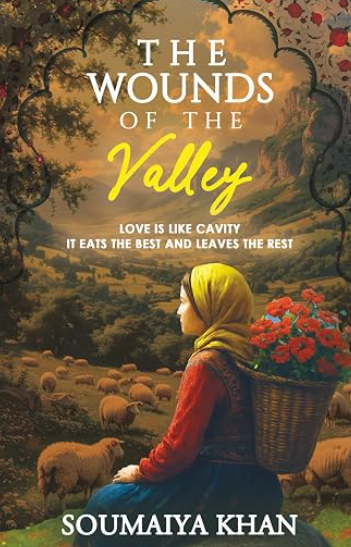
The Wounds of the Valley is one such story. Set against the backdrop of Kashmir, the novel explores difficult realities surrounding childhood, abuse, addiction, conflict and the struggles faced by those growing up in an environment shaped by uncertainty. Through the journeys of Iza and Ifat, the book brings forward questions about survival, motherhood, hope and the responsibility we share towards protecting children.
For the author, this book is also deeply personal. Returning to writing after years of marriage and motherhood, she sees it as an important step towards finding her voice again and building a career around storytelling.
In this conversation, we speak to the author about the inspiration behind The Wounds of the Valley, her connection with Kashmir, the experiences that shaped its characters, and why she believes that hope and peace remain essential, even in the most difficult circumstances.
Q. 1. Congratulations on the book launch. After returning to writing years after your debut, what does releasing this book mean to you personally?
Ans 1. Thank you. The Wounds of the Valley has my heart. Personally, this book is a stepping stone for me finally wrapping up my postpartum roller coasters. After all these years of always wiping a bum or cleaning a dirty laundry basket, I’m finally walking towards building a career in writing stories that help me connect with the world through the words that drown me in joy.
“It sounds like this book marks a very special new beginning for you, both personally and professionally. Finding your way back to something that brings you so much joy must feel incredibly fulfilling.”
Q. 2. This story carries a statutory warning and confronts difficult realities like abuse, addiction, and systemic failure. What gave you the courage to tell this story?
Ans 2. This story will give the audience a real insight into what is actually the reality of the children of the valley. The trauma they are put through is astonishingly painful. And it is not just the children of the valley; children all over the world are paying a price for higher authorities who are unable to keep this world stable for the sake of these little kids, who end up in drugs, child abuse, and a never-ending cycle of trafficking. My courage comes from being a mother myself. I wouldn’t have thought about or felt the pain as deeply if I weren’t as worried as I am when I put my children out into this very dangerous world. So, in order to protect my children, and every child that is born, they need to be cared for and protected.
“That is a powerful reason to tell this story. When the concern comes from such a personal place, it makes the responsibility behind writing it even more meaningful.”
Q. 3. The characters of your book, Iza and Ifat, are two very different women. Who/what was the inspiration behind these two characters? How did their journeys take shape in your mind?
Ans 3. Both Iza and Ifat are girls who grow into women because of the circumstances they are put through. But they are both strong and have powerful personalities, just as the women around us do today. We all now have a voice, options, and visions that cannot be suppressed. So yes, my girls are the women I want to be inspired by. My mind is a madhouse; it makes everyone the best versions of themselves.
“I love that description of your mind! And I think there’s something particularly inspiring about creating women who are shaped by difficult circumstances but are never defined by them. It sounds like Iza and Ifat represent the strength you see in women around you.”
Q. 4. Kashmir is always a topic of controversy. What is your connection with the state? Also, was it difficult to maintain the authenticity of life in Kashmir?
Ans 4. Honestly, yes and no. Yes, because it would always be controversial. Someone has to talk about it, and that’s me. I don’t believe in writing safely. No, it wasn’t difficult once I had all that I wanted to know and understand about Kashmir. Everything just kept flowing like the most beautiful valleys of Kashmir.
“That’s quite a strong approach to storytelling. Writing about a subject that may invite different opinions takes conviction, and it seems you were clear about the story you wanted to tell.”
Q. 5. The line “hope is rebellion and survival, an act of courage” lingers long after the book ends. How do you define hope in a place shaped by conflict?
Ans 5. Hope is what our lives depend on. In a place of conflict, or even in our normal lives, we hang only by hope. The hope of finding love, the hope of finding success, and the hopes that fill everything we dream of.
“That’s a lovely way to put it. We often think of hope as something we hold on to during difficult times, but it is also what keeps us moving towards the things we dream of.”
Q. 6. Women in your story are driven by the protection of family & children. Was this theme inspired by lived experiences or observations?
Ans 6. A bit of both. Family is extremely precious, and a woman is so diligent that everything she touches turns into something so magnificent that it is unusual to simply let go.
“That’s an interesting perspective on the role women play in holding families together. The instinct to protect the people we love can be incredibly powerful, and it is fascinating to see how you’ve explored that through your characters.”
Q. 7. The novel doesn’t offer easy resolutions or conventional happy endings. Why was it important for you to stay true to that emotional realism?
Ans 7. I couldn’t fake a situation because that would be unfair to the people of the valley. I wanted to show the reality and the raw, uncomfortable endings that people in any area of conflict have. The only solution I’ve pushed towards my readers is that we can change when we ask for accountability from those who are in power, so we don’t see any more of what my book brings to real life.
“I understand what you mean. Sometimes, giving a story a convenient ending can take away from the reality it is trying to portray. Staying true to those experiences also makes the message behind the book more difficult to ignore.”
Q. 8. After years of marriage and motherhood, how did returning to writing change you, as a writer and as a woman?
Ans 8. Marriage and motherhood make me thoughtful and help me see the world with a deeper sense of responsibility. They help me translate my thoughts into deeper emotions that felt much lighter when I wasn’t who I am now. In order to feel light, we actually do have to walk through the dark tunnel.
“That’s a beautiful way to describe personal growth. It seems that the experiences you’ve gathered over the years have not only changed the way you see the world but also the way you express yourself through writing.”
Q. 9. You write, “Peace is the real destination.” After finishing this book, do you feel closer to that destination, and what do you hope readers carry with them once they close the final page?
Ans 9. I hope my readers find peace in whatever they do in their everyday lives, because each day that we live, each day we learn peace. Knowingly or unknowingly, it comes in different sizes and shapes, living or non-living, but this life is all the peace we aim for. My definition of peace is similar to what I hope for my readers. With each day, I come a little closer to peace.
“I like how you’ve connected peace with everyday life rather than treating it as something distant or difficult to achieve. Perhaps it is found in the little things we often overlook. And it’s lovely to know that this is also what you wish your readers to discover through the book.”
Q. 10. How has your publishing journey been with this book, from revisiting your voice after years to navigating the process itself, and what did the experience teach you as an author today?
Ans 10. Everyone at Papertowns just turned all my hyperventilating into a calm and smooth-sailing process. And I’m grateful that I can call them for my next book as soon as I’m ready!
“That’s wonderful to hear! Publishing a book can be an overwhelming experience, especially when you’re returning to writing after a long break. We’re glad the journey felt smooth and supportive, and we’re looking forward to seeing what you write next!”
A Story That Calls for Hope and Change
The Wounds of the Valley is a reminder that some stories need to be told, even when they are uncomfortable to read. Through its exploration of childhood, motherhood, survival and life in a conflict-affected region, the novel brings attention to realities that deserve greater understanding and accountability.
Our conversation with the author also reveals the deeply personal journey behind the book. From rediscovering her identity as a writer to finding the courage to address difficult subjects, this has been a story of returning to one’s voice and finding purpose through words.
And perhaps the most important thought to take away from this conversation is that hope and peace are not merely distant destinations. They are things we continue to seek, build and discover in our everyday lives.
As the author reminds us, “Peace is the real destination.”
Amazon
Kindle
Flipkart