














Breaking into the world of data analytics requires much more than mastering SQL, Python, Power BI, or Tableau. In today’s competitive job market, employers are looking for professionals who can think critically, solve business problems, and communicate insights with confidence.
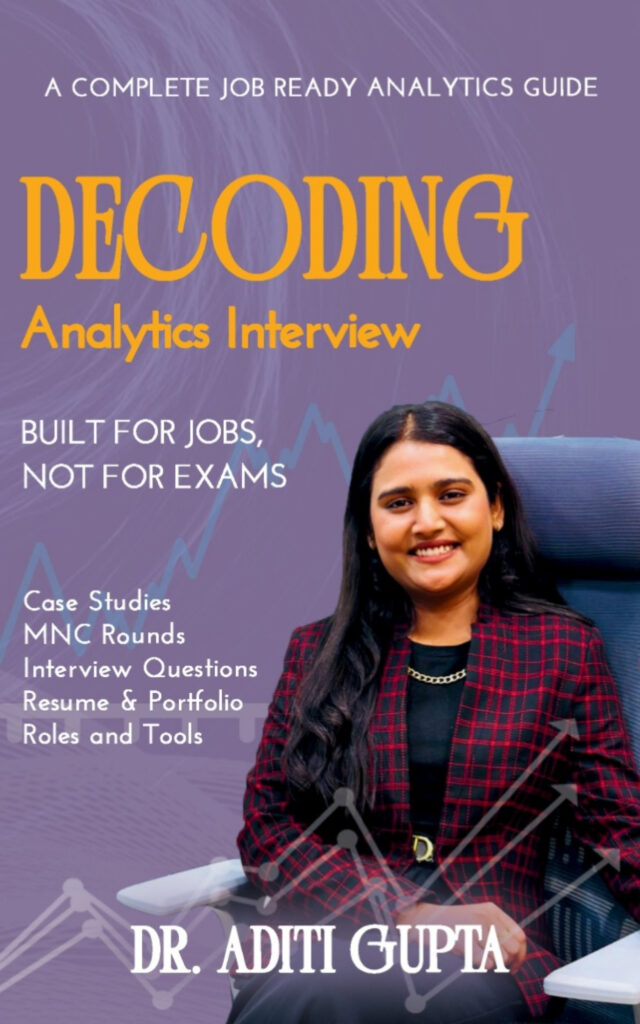
In Decoding Analytics Interview, the author draws upon years of industry expertise and mentoring experience to provide aspiring analytics professionals with a practical roadmap for interview success. Having trained over 60,000 students and professionals worldwide, the author has witnessed firsthand the challenges candidates face-not because they lack technical knowledge, but because they struggle to present their skills effectively.
In this exclusive interview, we explore the inspiration behind the book, common interview mistakes, the evolving expectations of recruiters, and actionable advice for anyone aspiring to build a successful career in analytics.
1. What inspired you to write Decoding Analytics Interview?
The inspiration came directly from my experience training over 60,000 students and
professionals across the globe. I noticed that many talented candidates possessed
strong technical skills but struggled to convert those skills into job offers. They spent
months learning tools like SQL, Power BI, Python, and Tableau, yet often felt lost
when it came to interviews. I wanted to create a practical guide that bridges the gap
between learning analytics and successfully launching an analytics career. Decoding
Analytics Interview is the book I wish every aspiring analyst had before attending
their first interview.
“Every impactful book begins with a problem that needs solving. Given your extensive experience mentoring aspiring analytics professionals, we were curious to know what motivated you to put your insights into a book.”
2. During your experience training over 50,000 professionals, what common mistakes have you observed candidates making during analytics interviews?
The most common mistake is focusing entirely on tools while ignoring business understanding. Many candidates can write SQL queries or build dashboards, but struggle to explain why a metric matters or how their analysis would influence decision-making.The second mistake is giving memorized answers rather than demonstrating structured thinking.The third is underestimating communication skills. Analytics professionals are expected to translate data into business insights, and interviewers often assess how effectively candidates can communicate their thought process.
“Many candidates invest months learning technical tools but still struggle to secure job offers. We wanted to understand the patterns you’ve consistently observed during interview preparation.”
3. Your book emphasizes that analytics interviews are more about thinking than tools. Could you elaborate on this perspective?
Tools are important, but tools can be learned. What organizations truly hire for is
problem-solving ability. An interviewer wants to understand how a candidate
approaches an unfamiliar problem, structures their thinking, asks relevant questions,
and arrives at logical conclusions.
A dashboard can be built by many people. What differentiates a great analyst is the
ability to identify patterns, challenge assumptions, and recommend actionable
solutions. Analytics is ultimately about decision-making, and that requires critical
thinking far beyond technical execution.
“This is one of the most thought-provoking ideas in your book. In a field often associated with technical expertise, your emphasis on analytical thinking offers a refreshing perspective.”
4. Who is the ideal reader for this book—students, working professionals, or career switchers?
The book is designed for all three groups.Students can use it as a roadmap to prepare for their first analytics role.Working professionals can leverage it to prepare for promotions or role transitions within analytics.Career switchers will particularly benefit because the book addresses how to position transferable skills, build a strong profile, and confidently navigate interviews despite coming from a different background.Anyone aspiring to build a career in analytics can find practical value in this book.
“Analytics continues to attract learners from diverse backgrounds. We asked who would benefit the most from reading Decoding Analytics Interview.”
5. The book discusses resume rejections. What are the top three resume mistakes candidates should avoid?
First, creating a generic resume that lacks customization for the target role.Second, listing tools without demonstrating impact. Recruiters want to see outcomes, achievements, and measurable results rather than a simple inventory of skills. Third, failing to showcase projects effectively. Many candidates mention projects but do not explain the business problem, methodology, insights, and impact. A project should tell a story, not just fill space on a resume.
“Before candidates even reach the interview stage, their resume needs to tell the right story. We wanted to hear your advice on the mistakes that often prevent deserving candidates from getting noticed.”
6. Why do you believe business and case-study questions are becoming increasingly important in analytics hiring?
Organizations today are not simply looking for report creators; they are looking for
business problem solvers. As analytics becomes more integrated with strategic
decision-making, employers want candidates who can connect data with business
outcomes.
Case-study questions help assess how candidates think, prioritize information,
define success metrics, and communicate recommendations. These are the same
skills analysts use daily in real-world business environments, making case-based
assessments increasingly relevant in hiring processes.
“Hiring trends continue to evolve, and case studies have become a crucial part of the recruitment process. We asked why these questions have gained such significance in today’s analytics landscape.”
7. What advice would you give to someone who has learned SQL, Power BI, Python, and Tableau but is still struggling to get interview calls?
I would encourage them to shift their focus from learning more tools to improving
their professional visibility and positioning.
Build a strong portfolio with business-oriented projects, optimize your resume,
strengthen your LinkedIn presence, network strategically, and showcase your
expertise through content or case studies. Many candidates remain invisible despite
being skilled. The challenge is often not capability – it is discoverability.
Employers hire professionals who can demonstrate value, not just certifications.
“This is a challenge faced by countless aspiring analysts. We were eager to learn what practical steps candidates should take when technical knowledge alone isn’t translating into interview opportunities.”
8. How can candidates showcase analytical thinking even if they have limited work experience?
Analytical thinking can be demonstrated through projects, internships, case studies, academic research, volunteer work, or even personal initiatives.
The key is to clearly explain the problem, the approach taken, the analysis performed, and the insights generated. Interviewers are often more interested in understanding how a candidate thinks than whether the experience came from a corporate environment. A well-executed project can sometimes be more impressive than years of routine work experience.
“Experience isn’t always measured in years. We wanted to know how fresh graduates and career switchers can effectively demonstrate their problem-solving abilities to potential employers.”
9. The book also covers LinkedIn optimization. How important is LinkedIn in today’s analytics job market?
LinkedIn has become one of the most powerful career-building platforms for
analytics professionals. Recruiters actively search for candidates, hiring managers
evaluate profiles before interviews, and networking opportunities often originate
through LinkedIn.
A strong LinkedIn profile acts as a dynamic resume that showcases expertise,
projects, achievements, and professional credibility. In many cases, opportunities
come not from applications but from visibility. Building a professional presence on
LinkedIn is no longer optional – it is a career necessity.
“Professional visibility has become just as important as professional capability. We asked why LinkedIn has become an essential tool for analytics professionals looking to advance their careers.”
10. What was the most challenging part of writing this book?
The biggest challenge was condensing years of industry experience, mentoring insights, and interview preparation strategies into a structured and actionable format.I wanted the book to be practical rather than theoretical.Another challenge was ensuring that readers from diverse backgrounds – students, professionals, and career switchers – could all find relevant guidance. Balancing depth with simplicity required extensive refinement and multiple iterations throughout the writing process.
“Transforming years of industry knowledge into a practical guide is no small task. We were interested in learning about the challenges you encountered during the writing process.”
11. How has the experience of bringing your manuscript to life as a published book with Paper Towns been for you as an author?
Seeing Decoding Analytics Interview transform from an idea into a published book
has been one of the most fulfilling milestones of my professional journey. Working
with Paper Towns provided the opportunity to bring my vision to a wider audience
and package years of mentoring experience into a resource that can create lasting
impact.
As an educator, trainer, entrepreneur, and mentor, my goal has always been to
empower individuals to achieve their career aspirations. Holding the published book
in my hands was not just an author achievement-it was a reminder of the thousands of learners whose challenges and success stories inspired every chapter. I hope the book serves as a trusted companion for aspiring analytics professionals and helps them approach interviews with confidence, clarity, and a strategic mindset.
“Publishing a book is the culmination of countless hours of learning, writing, and refining ideas. We concluded our conversation by asking you to reflect on this remarkable milestone and what it means to you.”
Our conversation highlights an important truth about building a successful analytics career: technical skills may open the door, but critical thinking, business understanding, and effective communication are what truly set candidates apart.
Through Decoding Analytics Interview, the author has transformed years of mentoring, industry experience, and real-world interview insights into a practical guide that empowers readers to approach analytics interviews with confidence and clarity. Whether you’re a student preparing for your first role, a working professional aiming for career growth, or someone transitioning into analytics, this book offers actionable strategies that extend far beyond interview preparation.
We thank the author for sharing their valuable insights and experiences with us. We hope Decoding Analytics Interview becomes a trusted companion for aspiring analytics professionals and helps countless readers take the next confident step in their careers.
Bring home your copy today. ⭐
Amazon