













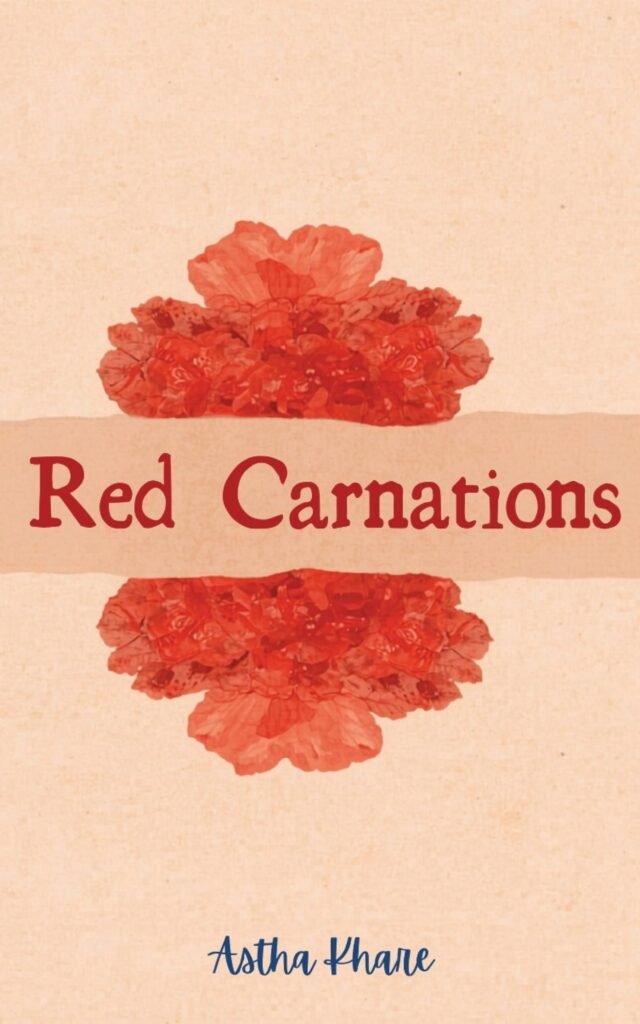
Some books are carefully planned over years, while others emerge naturally from life’s most intimate moments. Red Carnations belongs to the latter a heartfelt collection of poems, reflections, and observations that captures love, loss, hope, healing, and the quiet beauty of becoming.
In this exclusive interview with The Bookoholics, the author opens up about the inspiration behind the book, the significance of its evocative title, the role of poetry in conversations around mental health, and the deeply personal journey from scattered writings to a published collection. The conversation also offers a glimpse into the creative process, the emotions that shaped the book, and what’s next for the author.
Let’s dive into the conversation.
1. Congratulations on the release of Red Carnations! What inspired you to compile these poems, and reflections into a book?
Ans. Thanks! This book was not planned. My best friend noticed some potential in a stack of poems, notes, etc written over a period of around a decade. So, I guess it was just life, that inspired these pieces. Raw emotions penned down, I would say.
“It’s fascinating how some of the most meaningful books aren’t planned at all they simply grow out of lived experiences. Knowing that Red Carnations began as a collection of heartfelt writings makes the journey even more special.“
2. The title Red Carnations is both evocative and intriguing. What significance does it hold for you?
Ans. There is a short conversation, which is titled same as the book. It has a bit of my past, present, and a hopeful future in it. It made sense in that way for the book to be titled as such. Inspired by the experiences in the past, reflecting the introspection of the present, and holding on to hope for the future.
“The title beautifully reflects the emotional arc of the book, connecting the past, present, and future through a single, meaningful thread.“
3. Your book explores themes such as tragic romance, mental health, and everyday observations. What drew you to these subjects?
Ans. This book is a culmination of my personal experiences/hopes/desires in life so far. As life kept happening, I kept writing.
“Readers often connect most deeply with stories rooted in authenticity, and it’s evident that these themes come directly from lived experiences rather than imagination alone.”
4. As a debut author, what was the journey of writing your first book like?
Ans. There was no strategy, no active thought in terms of writing a book. It was all intense feeling, and a lot of vomiting of thoughts onto paper. Some of which felt like poetry and became a part of this book when I started compiling last year.
“Sometimes the most genuine writing comes without a blueprint. It’s inspiring to see how years of honest expression eventually transformed into a published collection.”
5. Is there a particular poem or piece in the collection that is especially close to your heart? If so, why?
Ans. I don’t think it’s fair to call out any of them, honestly. But if I really have to, I would choose(by a very slight margin!) the last four pieces of the book. And that is because they speak of my love for books, for words, for my self, and for my family. The book at large is about love, but these are the most fulfilling kinds of love in my life.
“That’s a beautiful perspective. Rather than choosing favorites, it’s clear that every piece carries its own significance, while the closing poems offer a particularly heartfelt glimpse into what truly matters.”
6. Mental health is a recurring theme in Red Carnations. What role do you think literature and poetry can play in conversations around emotional well-being?
Ans. It helps to know that you are not alone. Relatability kills loneliness to some degree by answering the question of “why me?” with a “not just you.” Other than that, art, of any kind, can contribute to mental well being in ways one cannot predict, considering it is open to the consumer’s interpretation of it. But that’s about one’s ability to grasp, filter, and view art, which is heavily dependent on state of mind. In terms of mass conversation, if the book/piece of art itself becomes a topic of conversation it lends more voice and validation to these ideas that the world needs to be more accepting of.
“Your thoughts highlight the quiet power of literature to comfort, validate, and remind readers that they are never truly alone in their experiences.”
7. Your quote, “I write when I cannot contain, and paint when I feel empty,” is quite powerful. Could you share the story behind it?
Ans. Weirdly, both of these started as coping mechanisms to anxiety. I suƯocate both with too many feelings and with the absence of any of them. Writing helps with too many feelings as a way of creating space in my mind while decorating paper with my thoughts. Painting helps with my dull days as I equate the canvas to my mind and in doing so, fill it with colours, at the very least.
“Thank you for sharing something so personal. It’s remarkable how both writing and painting have become different yet equally meaningful forms of healing and self-expression.”
8. What do you hope readers take away from Red Carnations after reading it?
Ans. Well, I should hope it’s whatever they’re looking for! But that’s a stretch. I hope it is ‘hope’, and self-acceptance.
“Hope and self-acceptance are powerful gifts for any reader to take away, and they resonate deeply in today’s fast-paced world.”
9. If a reader could remember just one feeling or message from your book, what would you want it to be?
Ans. Whatever you’re healing from, it is not just healing; it is your becoming into who you’re supposed to be.
“That’s a truly memorable thought. It transforms healing from something we simply endure into something that shapes who we become.”
10.Can readers expect more books, poems, or creative projects from you in the future?
Ans. At present I’m actively working on a Hindi poem compilation, and a novella in English.
“That’s exciting news for your readers! It’s wonderful to know they’ll soon have the opportunity to experience more of your creative work in different forms.”
11. Finally, how would you describe Red Carnations in three words?
Ans. Becoming, reclamation, and acceptance.
“Those three words beautifully capture the emotional essence of Red Carnations and leave readers with a lasting impression of its heart.”
Every conversation with an author offers a window into the heart of a book, and this one is no exception. Through Red Carnations, the author reminds us that vulnerability, hope, and self-acceptance are not just themes to be written about they are experiences that shape us all.
We thank the author for sharing these thoughtful insights and wish them the very best for the journey of Red Carnations and the creative projects that lie ahead.
If you’re looking for a collection that speaks to love, healing, introspection, and the beauty of becoming, Red Carnations is a book worth exploring.
Hurry Up! Grab your copies of Red Carnations
Amazon
Flipkart