







Music and poetry have always shared a close relationship. Both have the ability to express emotions, capture moments, challenge perspectives, and reflect the world around us. From the rhythm of a song to the imagery of a poem, the two art forms often come together in unexpected ways.
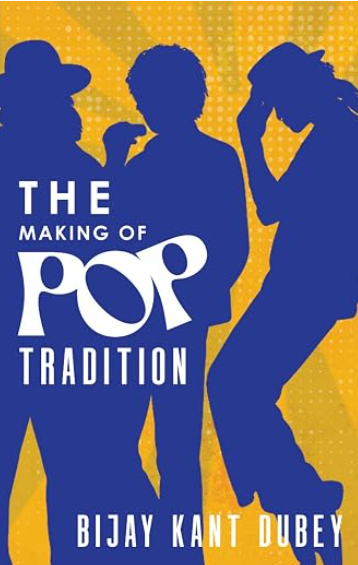
The Making of Pop Tradition explores this fascinating intersection through poetry, music, satire, and cultural observation. Drawing inspiration from iconic figures such as Michael Jackson, Leonard Cohen, and Bob Dylan, the collection moves across different musical and literary traditions, reflecting on the people, sounds, and influences that shape popular culture.
In this interview, we speak with the author about the relationship between music and poetry, the role of satire in creative expression, and the inspiration behind The Making of Pop Tradition. From musical legends and literary influences to the rhythms of everyday life, this conversation offers a glimpse into the thoughts and creative journey behind the collection.
1. What inspired you to explore the connection between music and poetry in The Making of Pop Tradition?
First of all, thank you for your questions. I too would not have interviewed with my questionnaire as you have here, completely bowling me out and I really feel bowled out, with my bails fallen off the stumps and I going back to pavilion.
Music and poetry, poetry and music, the poet as a word-maker, a music-maker, what to say it about?. O my heart, go you singing, O my heart, go you dancing! A singer I, a dancer I creating music out of. Poetry as lyrics combining music and lyricality, song, dance and romance and I feeling the thrill of music through words tumbling to me. I try to sing before I write; I try to emulate dance before I write. I ret to paint before I write. Poetry is pictures.
“That’s an interesting way to look at poetry, almost as an experience that begins with music, movement, and images before finding its way into words.”
2. Several of your poems engage with satire and social observation. What attracts you to satire as a form of poetic expression?
The art of satire, the art of humour, are types I have tried to regale with and sometimes irony and satire have attracted, drawn my attention to with some observation to be intended to pass on as a note, Irony, humour and satire, the variations they contain in we need to discuss elaborately somewhere. Nonsensical verses are also there but different from all these. Sometimes do I the jokes.
“Satire and humour can often say things that straightforward observations cannot. It’s interesting to see how you bring these different forms of expression into your poetry.”
3. What does “pop tradition” mean to you, and why did you choose it as the central idea for this collection?
Here pop culture, pop tradition, pop music have drawn me close to. How the vibes of music? How the trends and tendencies? How our tunings of life? And above all, where are we going?
Who the icons? Who the scions? Who the vibe-makers? Whose beats where? Who the drummer? Who the man on the banjo? Who is it strumming the guitar of the heart?
“Your description makes pop tradition sound like an evolving conversation between music, culture, and the people who shape them.”
4. The book references iconic figures like Michael Jackson, Leonard Cohen and Bob Dylan. What drew you to their work, and how did they influence your poetry?
Michael Jackson, Leonard Cohen and Bob Dylan, I walking past my way under the shadow of the masters and the cinema leaving me not, I seeing their lively pictures, standing under their towering images. How the earth slipping under Jackson’s feet? .Ever ready to make you dance, such is the posture and pose, a dancer boyish or girlish? Dylan nonplussed with the award of the Nobel Prize as for his songs, can songs be called poetry, the question engaging his mind, he thinking within?
“These artists have each left a distinct mark on music and culture. Their presence in your collection adds another dimension to the relationship between songwriting and poetry.“
5. How do you decide whether an idea belongs in a poem, and when does an observation become poetry for you?
Poetry for me is observation; poetry for me is thought and idea. Poetry for me is comments; is criticism. Criticize me; do a critique of.
“That’s an intriguing perspective. It suggests that poetry doesn’t always need to begin with an extraordinary experience; even an everyday observation or a critical thought can become a poem.”
6. Were there particular songs, musicians or poets that played a significant role in shaping your voice as a poet?
American pundits, British writers, world-famous musicians, painters and dancers, their legacy I cannot.
I write, I write the poetry of Whitman, the poetry of Ginsberg, the poetry of Bob, the poetry of Jackson. I feel the music and magic of his name and Jackson seems to be before me dancing and taking the centrespace. I write the poetry of Dylan Thomas. The Beats and the Beatles have not left me, Hare Rama Hare Krishna Movement and its music I still feel it. Gypsy life and living, gypsy music and vibes continue to take me on.
“That’s quite a diverse range of influences, spanning poetry, music, and cultural movements. It gives us a sense of the many traditions that continue to find their way into your writing.”
7. Your collection brings together different forms and traditions of music. How did you approach creating a poetic conversation between such diverse influences?
I want to keep abreast of the rich traditions of music and culture which can really enrich me with new thoughts and ideas. What do the world vocals and musical notes say? How their beats and rhythms?
“It seems that staying curious and open to different musical traditions is an important part of your creative process.”
8. What was the most challenging aspect of bringing together such varied musical, literary and cultural influences in one collection?
The girl playing the violin or the guitar by the shores of the Mediterranean or the Atlantic tells of a melancholic strain heard through. I have tried to assimilate in the pain and pines of the world. I have tried to see the wide and vast world with love. Who is a foreigner? I do not know that.
“That’s a beautiful thought about finding a shared human experience through art, regardless of geographical or cultural boundaries.”
9. What would you like readers to discover about music, poetry or themselves while reading The Making of Pop Tradition?
The making of pop tradition is not about poetry, but about going pop, a journey from folk, chapel and farm to modn to jazz, rock and blues.
“That journey across musical traditions gives readers an interesting way to look at how popular culture evolves and how different sounds become part of our shared cultural experience.”
10. How has your journey of bringing this book to readers with Paper Towns Publishers been, and what has the experience taught you as an author?
I am happy for the road taken and the road bringing me here. A Bohemian, a romantic, I going with my gypsy viewing, gypsy observation, what has life given to me and what have I to life? Tell me. Ladies and gentlemen! My life nomadic and my bands gypsy bands. Thank you. I am going. See you again, bye-bye!
“It’s wonderful to see this journey come together in a published collection. Your closing words also reflect the free-spirited and exploratory nature of the book.”
Where Music, Poetry and Pop Culture Meet
The Making of Pop Tradition offers a distinctive exploration of music, poetry, and the cultural influences that shape artistic expression. Through references to legendary musicians, literary figures, satire, and everyday observations, the collection reflects a creative journey that moves across genres, traditions, and experiences.
This conversation highlights how poetry can extend beyond words on a page. It can draw from music, movement, humour, criticism, and the world around us. Whether it is the influence of Bob Dylan, the energy of Michael Jackson, or the legacy of literary voices like Walt Whitman and Allen Ginsberg, the collection brings together varied influences through the author’s own perspective.
For readers interested in poetry, music, pop culture, and literary experimentation, The Making of Pop Tradition offers an opportunity to explore the connections between these art forms and discover the many ways they influence one another.
Because sometimes, poetry doesn’t just need to be read. It needs to be heard, felt, and experienced.
Amazon