










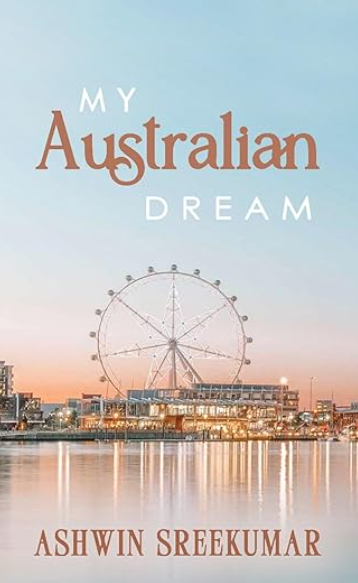
Stories of migration are often told through milestones, but the true essence lies in the emotions, choices, and quiet moments of transformation that shape them. In My Australian Dream, Ashwin Sreekumar offers a deeply personal and reflective account of his journey from his early life in India to building a meaningful career and identity in Australia.
In this conversation, Ashwin shares insights into his experiences as an international student, the challenges of belonging, and the inspiration behind weaving music into his narrative. Through honesty and introspection, he opens up about what it truly means to navigate two worlds while staying rooted in one’s values.
Q1. What was the moment you decided you wanted to share your story with the world?
The idea of sharing my story came gradually rather than in a single moment. Over the years, I met many young people who aspired to study abroad but were navigating uncertainty, financial pressures, and questions of identity. When I reflected on my own journey, from leaving home as an international student to building a life and career connected with Australia, I realised that many of the struggles, doubts, and moments of growth were universal. My Australian Dream was written with the hope that someone standing at the beginning of that journey might see a part of themselves in the story and feel a little less alone.
“It’s fascinating how some stories unfold over time rather than beginning with a single defining moment.”
Q2. Being a child of migration, how did you feel when your whole world shifted with its landscape? Would you change any of it, if given the chance?
Migration is both exhilarating and unsettling. When your landscape changes, so does your sense of belonging. There were moments of excitement and discovery, but also moments of loneliness and cultural adjustment. Over time, you learn to carry two worlds within you. Looking back, I would not change any of it. Those experiences, both the difficult and the joyful, shaped who I am today. They taught me resilience, empathy, and the ability to see the world from multiple perspectives.
“Migration often brings both excitement and uncertainty and It plays a crucial role in transition, shaping your perspective, broadening your outlook”
Q3. Did you eventually find solace in your new surroundings, or was it always a second country for you?
Australia became more than just a place I lived; it became home, a place where I built relationships, community, and a sense of purpose. Over time, it was the people, the opportunities, and the shared experiences that transformed what was once unfamiliar into something deeply meaningful and familiar.
One country shapes your roots—your values, memories, language, and early identity—while the other shapes your journey, offering new perspectives, opportunities, and a space to grow. Rather than replacing one with the other, you learn to carry both with you.
For me, this duality has never felt like a conflict. Instead, it has been a source of strength. It allows you to appreciate where you come from while embracing where you are going. Over time, those identities begin to coexist rather than compete, creating a richer understanding of home, identity, and belonging.
“Finding a sense of home in a new country means embracing a new culture and gradually building a sense of belonging.”
Q4. Given all your experiences and struggles, do you have any tips for people who might be conflicted about making the same choice as you for a better future?
My advice is to approach the journey with both courage and realism. Studying or moving abroad can be transformative. Prepare yourself academically, financially, and emotionally. Build support networks, stay connected to your values, and remain open to learning from different cultures. Most importantly, remember that success abroad is not defined only by professional achievements—it is also about personal growth and the relationships you build along the way.
“It’s a great reminder that moving abroad is not just about career success, but also personal growth and meaningful relationships”
Q5. What were the challenges you faced while writing this book?
The biggest challenge was balancing the story for readers who may be at very different stages of life. Writing about one’s own journey meant revisiting moments that were emotionally intense, while also reliving the joyful milestones with the same energy and gratitude. My intention was to tell the story as it was truly lived, while still carrying a message that readers from different walks of life could connect with.
Those challenges were also met with incredible support—from my publisher, who believed in the story from the very beginning, to family and friends who were among the first to hear about the book and encouraged me along the way. It was also deeply meaningful to receive support from the Australian government, who honoured the book by contributing the foreword. Together, that encouragement made the journey of writing the book all the more special.
“It’s inspiring to see how you balanced such a personal journey while creating something meaningful for diverse readers.”
Q6. Would you say this is a raw account of all things that went wrong before going right, or did you change certain things?
The book is rooted in real experiences, but it is also a reflective narrative. Like any memoir-inspired work, it focuses on the lessons and turning points. The intention was not to create a catalogue of difficulties, but to show how challenges, perseverance, and opportunities intersect to shape a journey.
“It’s inspiring how you’ve focused on meaningful lessons and growth rather than just challenges, making the journey relatable and impactful”
Q7. Blending the diasporic narrative with music is a rather new concept. How did you come up with that?
Blending the diasporic narrative with music came very naturally to me because of my father, who was my greatest inspiration. He had a recording studio at home where bands would come to play and record albums, and music was a constant presence in our lives. His love for music was only second to his love for my mother, and growing up in that environment meant we were deeply influenced by the sounds, artists, and genres that filled our home across decades.
As I wrote the book, it felt fitting that music would form part of the narrative. The chapter titles are inspired by songs from my father’s music—drawn from the songs and records that filled our home while I was growing up, while many of the songs referenced throughout the book are ones that became personal to my own journey. In that sense, the music in the book reflects both the influence I inherited from my father and the soundtrack that shaped my own story.
“The way music and personal memories intertwine in your story adds a deeply emotional and unique layer to the narrative.”
Q8. How was your publishing experience with this book? Would you say that, for an author, the struggle ends at writing the book, or does it continue after the book is published?
Answer:
Publishing is very much a journey of its own. Writing the book is only the first stage, and in many ways a book truly begins its life once it reaches its audience. In between, the publisher works their magic—shaping the manuscript and bringing the story to life. The experience taught me that authorship requires not just creativity, but also patience and persistence. I’m deeply grateful to my publishers, Paper Towns, for believing in the story from the very beginning and for making the entire process seamless.
“It’s insightful to see how publishing goes beyond writing, and your appreciation for the journey and your publishers truly stands out”
Q9. Since your Australian Dream is fulfilled, what’s next? Will you be venturing further as an author, or was this book a one-and-done?
My Australian Dream reflects my journey up to this point—capturing the experiences, challenges, and moments of growth. It tells the story of my path from my early years, through my experiences as an international student and professional, to building a life and sense of belonging connected with Australia.
What comes next is a collection of poems I have been working on for many years. It’s a deeply personal body of work, and I may even choose to publish it under a pseudonym.
“It’s wonderful to see how your experiences have shaped your story, and your upcoming poetry collection sounds truly intriguing”
Q10. If you were to continue writing, will the readers see similar work from you, or will you plan on exploring other genres?
Writing, for me, is something that should evolve naturally rather than be rushed. While my style may remain consistent, the subject matter may change as new ideas and experiences shape the direction of my work. I would certainly be open to exploring different genres in the future, but I believe every piece of writing has its own time and space to develop. For now, I’m content to let the process unfold and allow time to guide what comes next.
“Thank you for sharing such a thoughtful perspective. Your reflections on writing and your journey are truly inspiring, offering a meaningful sense of connection and encouragement to readers”
Ashwin Sreekumar’s journey is not just a story of migration—it is a reflection on identity, resilience, and the quiet courage it takes to step into the unknown. Through My Australian Dream, he offers readers more than a memoir; he offers companionship to those navigating similar paths.
This conversation reminds us that while destinations may differ, the emotions of growth, belonging, and self-discovery are universal. And sometimes, all it takes is one story to make someone feel a little less alone on their own journey.
step into the inspiring journey of the Australian Dream and discover a story of courage, growth, and belonging.