














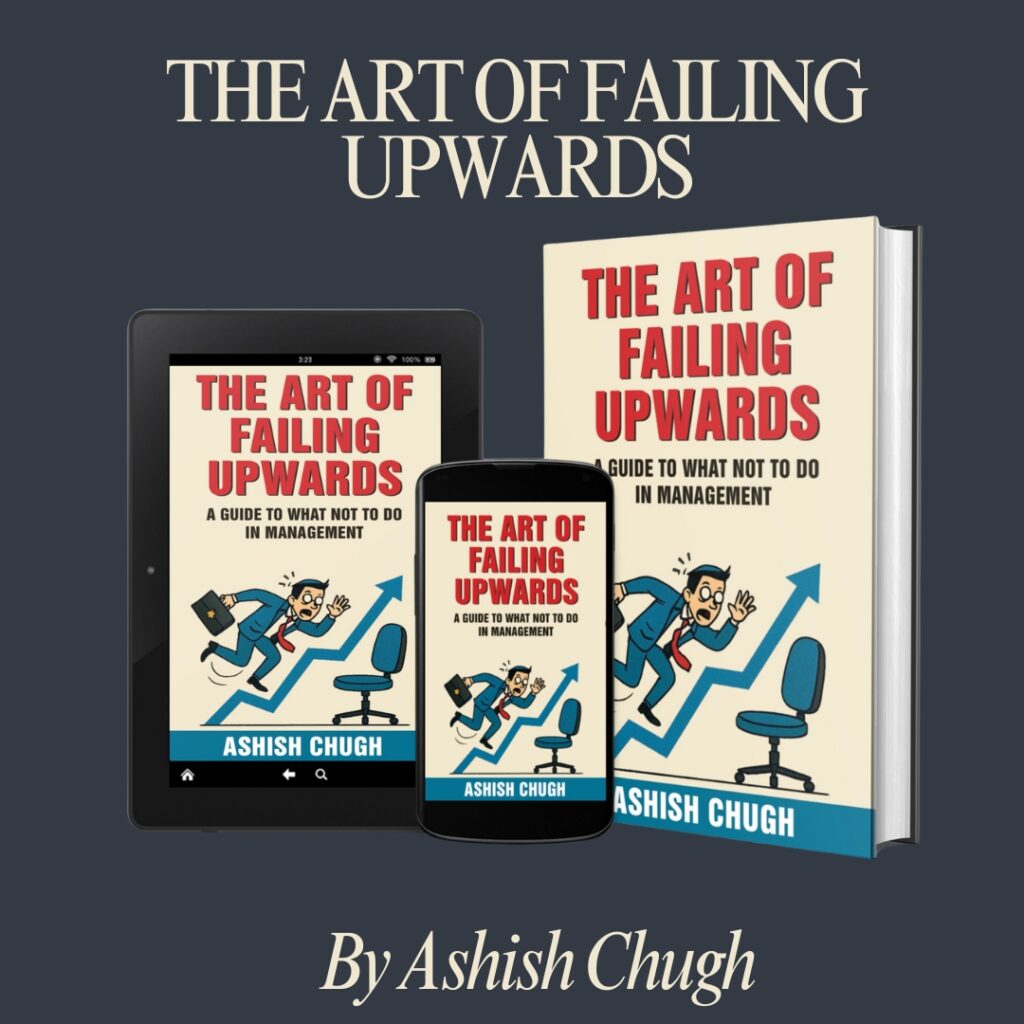
Some books are born out of inspiration. Others are born out of frustration, disbelief, and the quiet thought we’ve all had at least once at work: “How is this person still in charge?”
The Art of Failing Upwards sits firmly in the second category; it is sharp, satirical, and painfully familiar.
In this candid conversation, the author pulls back the curtain on modern workplaces, dysfunctional leadership, and the strangely universal experience of surviving bad bosses. What follows isn’t a management lecture or a motivational sermon; it’s an honest, humorous exchange that turns shared workplace pain into perspective, laughter, and clarity.
“Hi Ashish, thank you for taking the time to speak with us. Our team truly loved your book, and we have a few questions we’d be delighted to ask.”
Q1- How should readers interpret the symbolism of the title The Art of Failing Upwards?
Hi, it is my pleasure. To answer your question the title “The Art of Failing Upwards” is a cheeky nod to bosses who trip over their own egos, land in the corner office, and somehow get a promotion plaque for it. The title means bosses fail but climb higher anyway. It is like a kid who breaks toys but gets more. The “art” part is studying these fails. You learn to laugh at them. You also learn how to avoid them. It turns bad work moments into useful lessons. No more shock when bosses act strange. You expect it now.
Picture failure as a bad magic trick: bosses pull rabbits out of hats that are actually rabid squirrels, yet the audience (aka the board) claps anyway. The “art” part is the satire—studying these flops like a wildlife documentary on corporate zoo animals, so you learn to spot the stampede before it flattens your cubicle.
“That imagery lands uncomfortably close to home.”
Q2-Was there a moment or experience that made you think, “This has to be a book”? In short, what first sparked the idea for The Art of Failing Upwards?
There were many experiences in the last three decades. This book was actually in inception for quite some time. With a few recent incidents with Chetna and me, it just triggered us to bring out something that is NOT a management book but still gives quite a bit of insight. We purposely choose to make it humorous and satirical. The Stalker, the Screamer, and rest of them are real people – we dealt with them. In reality, they are the core inspiration of this book.
“It explains why the characters feel disturbingly real.”
Q3- What was the hardest part of turning your experiences into a book?
The tough part was changing real mad stories into funny ones. You want to point at the bad boss. But that causes problems. So, mix many stories into new ones. Change names and places. Keep the real feelings. Make people laugh, not just get angry. It took many tries. Balance truth and safety was key.
It’s like editing a revenge diary into a self-help roast—cut the venom, amp the wit, ensure it’s “Frankenstein stories” that sting true but protect the innocent (and the author’s hide).
“Yeah, It’s sharp without being unsafe.”
Q4-What surprised you most about your own writing during this journey?
Bad boss actions repeat everywhere. How every clownish boss trope popped up in a dozen workplaces, like bad management is copy-pasted from a glitchy HR template. You see the same tricks in tech jobs. In sales teams too. Big firms and small ones. It feels like a copy-paste error.
Also, you feel sorry for some bosses. Many are scared or new to leading. Writing showed their weak side. Laughs got mixed with understanding.
“Wow the mix of satire and empathy is rare.”
Q5-How much of The Art of Failing Upwards is drawn from your own workplace experiences?
Almost all comes from real work. Your own hard times. Stories from my co-author, Chetna too. Blend them so no one guesses names. The pillow-screams on Zoom, twitchy footsteps, meetings like fever dreams? Pure workplace voodoo, disguised just enough so “John Doe” thinks, “Hey, that’s not me… wait.”
“That “wait…” moment might be the most dangerous part of the book, if you gift this to your boss or a senior.”
Q6- Which writers or books shaped the way you approach storytelling, the voice, and sharpness, The Art of Failing Upwards?
The funny style comes from Dilbert comics. They mock office life. The Office Space movie does it too. Sharp jokes about work woes. Old writers used humor for big fixes. Like pointing out problems with laughs. It blends fun with real tips on bosses. Easy to read but smart.
“Good ones”
Q7- What would you like to say to readers picking up your book for the first time?
Pick a quiet spot. Grab a drink if you like. Open the book. You will nod and say: “That is my boss exactly.” It proves your work is crazy. You are not alone or wrong. Laugh at the stories. Learn the ways to handle it. Then check yourself. Do not copy the bad ones.
“So a comforting takeaway for many readers.”
Q8- You distinguish clearly between a “leader” and a “boss.” Why do you think this gap exists in modern workplaces?
Boss means the job title. Many bosses fix people like machines. A boss is a badge for anyone who excels at spreadsheets but fumbles humans; a leader is the myth who actually grows people. Gap? Companies fling tech wizards into management meat grinders without a “people” manual, then cheer short-term wins while the team burns out like overcooked geese.
“That explanation feels brutally honest”
Q9- This book is more than a list of complaints. You describe the book as a way to turn frustration into wisdom. In that light, what’s one mindset shift you hope readers make after finishing it?
Readers should shift from “Work is hell” to “I know this type now.” Spot the controlling boss. Or the one who twists facts. Name it. Then make a plan. Log what happens. Stay calm. It changes mad days to smart moves. You win even if they don’t. The frustration alchemized: complaint fuel becomes your secret map through the madness.
“The shift from helplessness to awareness feels like the real power of the book.”
Q10- What does this book say about the state of modern work culture?
A surreal safari: meetings as ego rodeos, feedback from drunk parrots, burnout as the company perk. Rewards optics over output, birthing a zoo where survival trumps sanity. Fear rules too much. But laughs help, along with smart guides like this.
“Hmm, its a snapshot many workplaces would rather ignore.”
Q11- How did writing this book change the way you see authority and leadership?
Stripped the throne bare: authority’s just rented behaviors, judged by whispers in break rooms, not titles. Leadership? It’s what your team does when you’re not watching—real power’s in unleashing them, not herding geese.
“A fitting note to end our interview- authority exposed, leadership redefined.”
The Art of Failing Upwards doesn’t offer five-step formulas or polished leadership jargon. Instead, it offers something far more valuable: recognition, laughter, and clarity. Through satire, lived experience, and sharp observation, it gives readers permission to trust their instincts, name the dysfunction, and choose not to become part of it.
For anyone who has ever survived a bad boss, questioned their sanity at work, or quietly vowed to “do better if I’m ever in charge”, this book doesn’t just speak to you.
It sees you.
Grab your copy today
On Amazon
On FlipKart
Also follow Ashish’s journey on his socials-
Instagram