













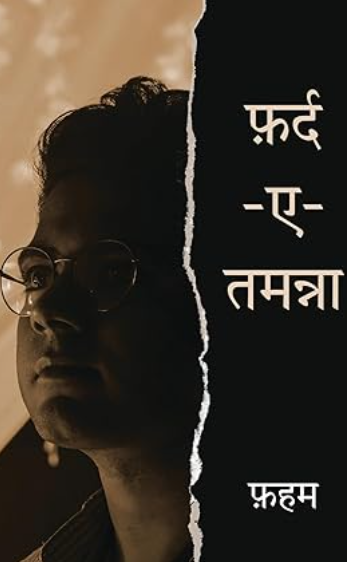
Every book carries a story beyond the words printed on its pages, and every poet carries a journey that shapes those words. Fard-e-Tamanna is more than just a collection of poems it is an exploration of emotions, resilience, uncertainty, and hope. In this exclusive conversation, we sit down with the author to delve into the inspiration behind the book, the creative process, and the experiences that have influenced this remarkable literary work.
From discussing the significance of the title to reflecting on the publishing journey with Paper Towns India, the author offers thoughtful insights into poetry, identity, and the power of connecting with readers. Here’s the conversation.
Q1. What inspired the creation of Fard-e-Tamanna, and what does this collection represent in your literary journey?
After “Wajood Nama”, or the records of survival and “Bawajood”, or although, “Fard-e-Tamanna” reflects the rebuilding of a person out of the debris of ownself. From the very beginning I’ve tried to stand beside people who hide their pain under the masks of smile, who appear completely normal to the society and suffocate themselves in solitude.
“The journey from one book to another often reflects the evolution of a writer’s thoughts and emotions.”
Q2. The title Fard-e-Tamanna carries a poetic weight—what meaning does it hold for you personally and artistically?
Well the word “Fard” means list or index primarily, but another meaning of the same word and spelling means “the person”. The contents of this collection will justify one or the other meaning of “Fard e Tamanna” on sincere reading.
“The title itself sparks curiosity”
Q3. How does Fard-e-Tamanna differ from your earlier works, Wajood-Nama and Ba-Wajood?
Every person is in a different state of emotion, I’d rather suggest a book according to the reader’s state, like when you are deeply in sorrow and looking for a way out, go for Wajood Nama, when you are rebuilding yourself, go for Bawajood, and when you are at a state of confusion or lacking certainty in life, which I believe most of the time we are, go for Fard-e-Tamanna.
“The author sees books as emotional companions, each suited to a different state of life and inner journey.”
Q4. Was there a particular poem or section in the book that felt especially close to your heart? Why?
All of the poems are my darlings, but the couplet:
सच को दुहरकर साबित नहीं होना होता,
जितनी चराग़ जलाईं हैं, उतना अंधेरा भी नहीं।।
is very important to me. I believe I would keep the explanation for everyone else to impose, because it has a range of possible meanings.
“The author keeps the couplet open to interpretation, valuing its personal meaning and depth.”
Q5. Your poetry feels deeply reflective—do you write from lived experience, observation, imagination, or a blend of all three?
Of course it is a blend because writing only about your own experience is a kind of advocacy I’d say, an artist of any genre must have the vision and instinct of studying different perspectives of the events. Imagination is a reflection of the reality, so if one can imagine, that’s a bonus.
“The author believes writing is a blend of lived experience, observation, and imagination, where imagination itself reflects reality.”
Q6. Your journey spans Bengal, Jharkhand, and multiple languages—how have these places and cultures influenced your poetry?
It is a tough question to answer since the places, respective cultures and languages have contributed to my identity as a whole, so if one asks me about what I am, there are a bunch of attributes I can respond with, but if one asks me who I am, that is better to be felt rather than heard.
“The author reflects on how places, cultures, and languages have shaped an identity that is best experienced rather than explained.”
Q7. If you had to describe Fard-e-Tamanna in three words, what would they be and why?
Relatable, motivational and friendly. Relatable because I’ve tried to include different emotions and perspectives, Motivational because once mine and a reader’s emotions are in harmony, we’ll work on the future behaviour and responses, and friendly because I’ve chosen the easiest possible words to express the toughest of thoughts.
“The author describes the book as relatable, motivational, and friendly, aiming to connect emotions, inspire growth, and simplify complex thoughts.”
Q8. What does it mean to finally place Fard-e-Tamanna into readers’ hands?
Being a supportive friend for everyone is what I believe my purpose is, so it is an effort to be an emotional support to an unacquainted person, who’s shy to beg for help.
“The author sees the book as a quiet emotional support, like a friend for those who struggle to ask for help.”
Q9. Looking back on your publishing journey, what has been the most meaningful part of bringing this work to life?
Gathering poems out of my own scrapbooks is the most memorable step, because I had to read them once more, some of them needed retouching, some of them were in oblivion, bringing them back and ordering them for the manuscript was the emotional disequilibrium a poet seeks for, which in fact have given rise to some poems again.
“revisiting old scrapbook poems as a deeply emotional process that revived forgotten pieces and even inspired new ones.”
Q10. What has been the most memorable part of your publishing journey with Paper Towns India?
A poet is already disturbed inside, irrationality and lack of logics are his strength whereas, an author must be logical and rational. Paper Towns literally took over the rational part and delivered something beyond my imagination. So the ease with which the book is published, without affecting my writing or pondering time is what I loved the most about Paper Towns and the team. I shall be ever grateful to them.
“We truly appreciate your feedback and value the experience of working with Us.”
Fard-e-Tamanna is a heartfelt reflection on human emotions, resilience, and the search for meaning in life’s uncertainties. Through this conversation, the author offers readers a glimpse into the experiences, philosophies, and creative process behind the collection, reminding us that poetry is not merely written it is lived.
As Fard-e-Tamanna reaches readers, it promises to become more than a book of poems; it aspires to be a companion for those navigating their own emotional journeys. We thank the author for sharing these thoughtful insights and wish them continued success as their words continue to inspire and connect with readers everywhere.
Pick up a copy of Fard-e-Tamanna and discover your own longing within its pages.
Amazon
Kindle
Flipkart