













What if age was never a limit to innovation? In a world where technology continues to shape how we learn, work, and create, curiosity can be the beginning of something extraordinary. For young minds interested in coding, robotics, and problem-solving, even a small idea can open the door to endless possibilities.
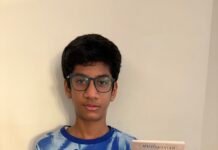
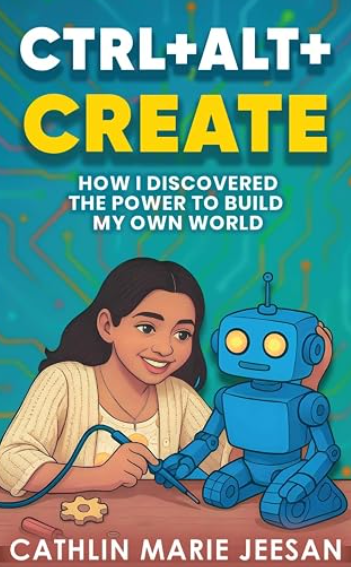
CTRL+ALT+CREATE explores this journey through the experiences of a young author who began coding in Grade 2 and went on to explore robotics, participate in competitions, and represent India at the World Robot Olympiad 2024. More than a book about technology, it brings together personal experiences, lessons from failure, and the excitement of turning ideas into reality.
Published with Paper Towns Publishers, CTRL+ALT+CREATE encourages young readers to experiment, ask questions, and discover their own creative potential. In this interview, we talk to the author about the inspiration behind the book, the journey into coding and robotics, competing on an international stage, and balancing academics with creative pursuits.
1. What inspired you to write CTRL+ALT+CREATE at such a young age?
I started coding in Grade 2, and from there, technology gradually became a way for me to explore my ideas and solve problems. As I got involved in robotics, competitions, experiments, and different projects, I collected so many experiences that I wanted to share them with others.
CTRL+ALT+CREATE was born from the thought that you don’t have to wait until you’re older to create something meaningful. I wanted the book to show how curiosity, when you keep pursuing it, can turn into something much bigger.
“It’s inspiring to see how an early interest in technology grew into a book that encourages other young minds to explore their ideas.”
2. Your book combines technology with personal experiences. How did you balance both while writing?
I didn’t want CTRL+ALT+CREATE to feel like a technology textbook. I wanted readers to see the person behind the projects, the excitement, mistakes, failures, learning, and small moments that happened along the way. So instead of simply explaining what I built, I connected the technology with the experiences that taught me something. That made the book much more personal and helped me explain complicated ideas through stories and experiences.
“That personal touch makes technology feel more approachable. Readers get to understand not just the projects, but also the learning and experiences behind them.”
3. If readers could take away one message from your book, what would you want it to be?
I would want them to understand that age should never become a limit on what they can create. You don’t need to know everything before you begin. You can start with one question, one idea, or even one small experiment and learn along the way. I hope readers finish the book thinking, “Maybe I can create something too.”
“That’s a powerful message for young readers: you don’t need all the answers to get started. Sometimes, the willingness to try is what matters most.”
4. What first sparked your interest in robotics and coding?
My curiosity started very early. I was fascinated by computers and how things worked, and coding gave me a way to make my ideas actually do something. Robotics made that even more exciting because I could combine coding with electronics, mechanics, and real-world problem solving. What started as curiosity gradually became something I genuinely loved.
“It’s interesting how curiosity about how things work can develop into a passion for building and problem-solving. That first spark can lead to so many possibilities.”
5. Can you tell us about your journey to the World Robot Olympiad 2024 and what that experience meant to you?
WRO 2024 was a very important chapter in my journey. I first competed at the national level and secured first place at the WRO India National Championship, which took us to the International Finals in Türkiye. Representing India on an international stage and competing against teams from 94 countries was an incredible experience. We eventually secured 3rd position and a gold medal.
But for me, WRO was about much more than the result. It taught me what it really means to work as a team, defend an idea, accept criticism, solve problems under pressure, and keep improving a project instead of becoming attached to the first version of it.
“Representing India on an international stage is a remarkable achievement. Beyond the recognition, the experience also highlights how teamwork, adaptability, and learning from feedback are essential to innovation.”
6. Have you ever faced failure during a competition or project? What did it teach you?
Definitely. Robotics has taught me that things rarely work perfectly on the first attempt. There have been times when a mechanism didn’t move as expected, a program failed at the worst possible moment, or an idea that looked good on paper didn’t work in reality.
Those experiences taught me not to look at failure as the opposite of success. In robotics, failure is often data. It tells you what needs to change. I’ve learned to ask, “Why didn’t this work?” rather than simply thinking, “This didn’t work.”
“That shift in perspective is valuable. Treating failure as feedback can help young innovators approach challenges with greater patience and confidence.”
7. How do you balance school, competitions, hobbies, and writing a book?
It isn’t always perfectly balanced! I have to plan my time carefully and sometimes give up things I would rather be doing at that moment. I try to divide larger tasks into smaller ones and use whatever free time I have effectively. I also think it helps that these things are connected – robotics gives me ideas to write about, writing helps me reflect on my experiences, and school gives me knowledge that I can apply to my projects.
“It sounds like planning and finding connections between different interests make a real difference. It’s also a reminder that balance doesn’t always mean getting everything right every day.”
8. What would you say to a child who thinks they are “too young” to build something meaningful?
Start anyway.
You don’t have to wait until you are older, more experienced, or completely confident. Begin with something small and learn as you go. You might make mistakes, and your first project may not be perfect, but that is completely okay. Some of the most interesting ideas begin with a child simply asking, “What if I tried this?”
“Sometimes, a simple push is all someone needs to take the first step. Starting small, staying curious, and learning along the way can make a meaningful difference.”
9. How would you describe CTRL+ALT+CREATE to someone who has never been interested in robotics?
I would describe it as a book about curiosity and creation, with robotics and technology as part of the journey. You don’t need to be interested in robotics to read it. At its heart, it is about trying things, making mistakes, solving problems, discovering what you enjoy, and having the courage to create something of your own.
The title itself, CTRL+ALT+CREATE, represents that idea for me: instead of just using the technology around us, let’s learn to create with it.
“I like how the book goes beyond robotics to explore a broader idea: becoming an active creator rather than simply a user of technology.”
10. How has your journey of bringing this book to readers with Paper Towns Publishers been, and what has the experience taught you as an author?
Bringing CTRL+ALT+CREATE from an idea to an actual book has been a completely different kind of journey from building a robot. With a robot, I can test a mechanism, find a problem, change it, and test again. With a book, I had to learn how to communicate my experiences clearly and make sure that my ideas could connect with someone I had never met.
“Turning personal experiences into a published book is a learning journey of its own. It’s exciting to see how ideas developed through technology can now reach and inspire readers through words.”
The journey behind CTRL+ALT+CREATE is a reminder that innovation doesn’t have to wait for a certain age or level of experience. From discovering coding in Grade 2 to competing at the World Robot Olympiad 2024 and becoming a published author, this story highlights what curiosity, persistence, and a willingness to learn can make possible.
For children interested in coding and robotics, the book offers an encouraging perspective on experimentation, teamwork, problem-solving, and learning from mistakes. For parents, educators, and anyone supporting young innovators, it also serves as a reminder to give children the freedom to explore their interests and pursue their ideas.
At its heart, CTRL+ALT+CREATE is about more than technology. It is about asking questions, trying something new, and having the confidence to create something of your own.
Because sometimes, all it takes to begin something extraordinary is one small idea and the courage to try.
Amazon
Kindle
Flipkart