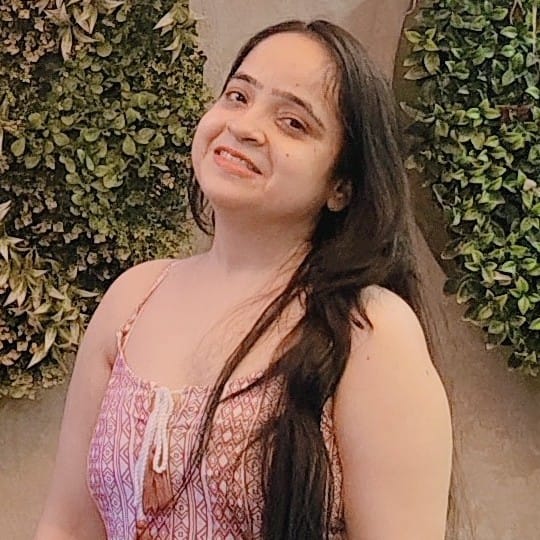














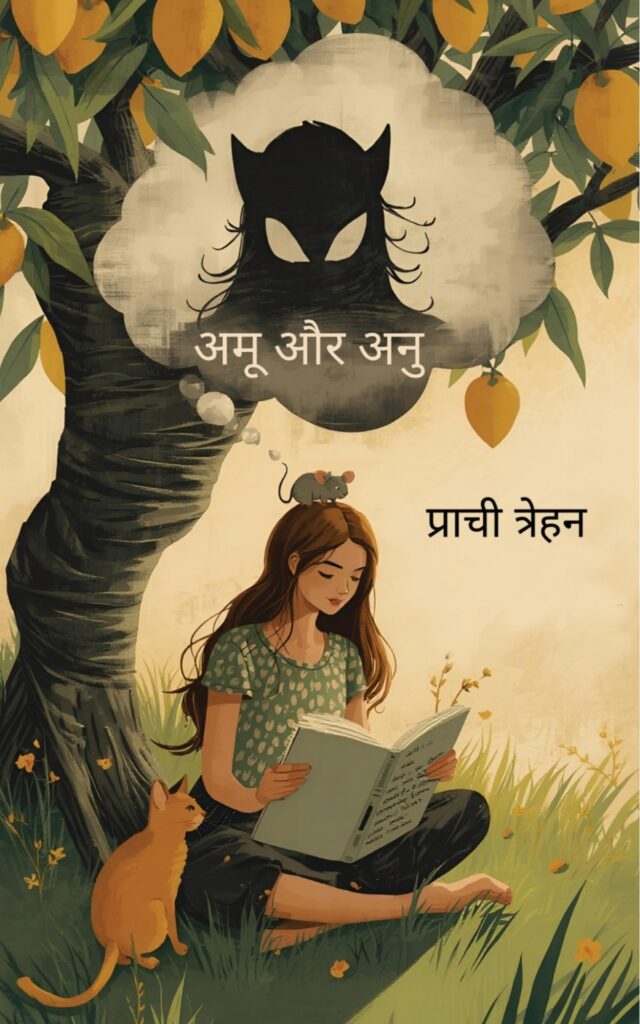
कहानियाँ केवल शब्दों का संग्रह नहीं होतीं, बल्कि वे भावनाओं का एक जीवंत संसार रचती हैं। “Amu aur Anu” भी ऐसी ही एक पुस्तक है, जो पाठकों को भावनाओं, रिश्तों और आत्म-अनुभवों की गहराई तक ले जाती है। इस ब्लॉग में हम लेखिका प्राची त्रेहन से जुड़े कुछ दिलचस्प सवाल-जवाब प्रस्तुत कर रहे हैं, जहाँ हर जवाब के बाद इंटरव्यूअर की प्रतिक्रियाएँ बातचीत को और भी जीवंत बनाती हैं।
Q1.Your book explores a plethora of emotions. What inspired you to put all that in one book?
As a Highly Sensitive Person and an introvert, I tend to observe and absorb the world through a magnifying glass. Writing is my sanctuary. It is a place where I can translate deep, complex feelings into something honest and articulate. This book is essentially a map of my own evolution. Each story was captured at a different stage of my life, holding the specific vibration of what I was feeling at that moment. I didn’t just want to tell a story. I wanted to bottle those raw emotions so they could live on the page.
“That’s beautifully expressed it feels like the book is not just written, but truly lived through different phases of your life.”
Q2.How did you come across the protagonists, Amu and Anu?
While this book features many protagonists, Amu and Anu are the ones who truly took root in my heart. As an introvert herself, Anu finds a rare, non-judgmental solace in nature that human relationships don’t always provide. I was moved by the idea of a bond where emotions are felt rather than spoken. This story is my way of holding onto the purity of childhood memories while addressing something that breaks my heart: the destruction of our natural world. I wanted to remind readers that we don’t just live on the earth; we belong to nature, and nature belongs to us.
“There’s something incredibly pure about that connection it feels both nostalgic and deeply meaningful.”
Q3.How do you balance the heavier themes across the lighter subjects in terms of writing?
I believe the best way to handle the complex is to approach it with simplicity. Life can be incredibly heavy, but I’ve found that a bit of humor or a lighter observation can act as a window, letting in some air so the reader doesn’t feel suffocated by the weight of the world. As an introvert, I know the value of a safe, quiet space. I want my book to be that for others; a place where they can sit with heavy emotions without feeling overwhelmed. By threading warmth and light through the shadows, I’m creating a soft landing for the heart, making sure the journey feels like a walk on a breezy evening rather than an uphill trek.
“That balance is so important it’s what keeps readers emotionally connected without feeling drained.”
Q4.Since each story is very different from the others, do you have a personal favourite or one that was particularly different to write?
It’s difficult to choose a single favorite because each story is a time capsule of a version of me that no longer exists. However, two specifically stay with me. Amu aur Anu holds a sacred space because it’s about that invisible language between a girl and a tree. It required me to look closer to capture a soul’s growth in total silence.
Then there is Kitten Kumar, which was very different to write because it explores the healing power of vulnerability. While Anu’s story is about a lifelong anchor, Kitten Kumar is about that sudden, unexpected spark of joy that pulls you out of the shadows. Both stories remind me that whether it’s through a tree or a kitten, we find our way back to ourselves through the lives we choose to nurture.
“It’s fascinating how two completely different stories can carry such deep emotional resonance in their own ways.”
Q5.If there’s one feeling or thought you want the readers to take away from this book, what would it be?
The one thought I want to leave with my readers is that every emotion you feel is valid. I hope these stories remind people to be gentle with themselves and to show up for their loved ones during emotional turmoil. Ultimately, I want them to walk away knowing that life is a kaleidoscope of difficult and beautiful moments. We are never truly alone as long as we choose to nurture the connections and the emotions that make us human. And to nurture ourselves.
“That’s such a comforting takeaway it feels like a gentle reminder everyone needs.”
Q6.Why was it important for you that the readers relate to the stories?
As an introvert who lives deeply in my own inner world, writing is my primary way of reaching out. For me, relatability isn’t just about liking a story. It’s about recognition. When a reader finds themselves in my words, it creates a silent, invisible thread between us. It’s my way of saying, “I feel emotions on a deeper level as well, and you aren’t alone in how deeply you feel.” I want my stories to be a safe harbor where someone else’s quiet emotions feel seen and validated.
“That sense of connection between writer and reader is truly powerful it turns stories into shared experiences.”
Q7.Does your personal life or private emotions hinder your writing process, or do you keep it separate?
I don’t believe in keeping them separate because my emotions are the very ink I use to write. For me, the writing process is a vital way to vent those feelings out. It’s how I take the internal storms I experience as a sensitive person and turn them into something articulate. My emotions don’t hinder my work; they act as a fuel for it.
However, I do practice a sense of detachment once a story is finished. Once I have poured those raw feelings onto the page, I feel I’ve given them a home outside of myself. This allows me to step back and let the story belong to the reader. Writing is my way of releasing the weight I carry, so that by the time a story is done, I’ve found my own solace, and the emotion can live on through the characters instead of just within me.
“That’s a beautiful way to look at writing turning emotions into something freeing rather than overwhelming.”
Q8.Did these stories turn out as you planned, or did any of these surprise you?
As an introvert, I usually start with a clear emotional map, but I’ve learned that stories are living things. They often surprised me by taking their own path. If a conclusion felt too forced or lacked the right resonance, it simply didn’t sit right with my heart.
I had to be honest with what the characters (and my own emotions) were telling me. For instance, with Amu and Anu, I initially planned for it to be a simple story about a girl and her tree. But as I wrote, Amu began to feel like a character with its own heartbeat and silent wisdom. If an ending doesn’t bring me a sense of peace or solace as a writer, I know it won’t feel right to the reader either.
“It’s amazing how stories evolve on their own it makes them feel more organic and real.”
Q9.As an author, how would you describe your journey from writing a book to publishing it?
Having reached my third book, the journey feels like a steady deepening of my own voice. In the beginning, writing was simply an act of retreat for me to process life’s complexities. Now, the process is more intentional. I still start in that quiet space, using my heightened sensitivity to focus on the smallest details of the human heart, but there’s a new confidence in knowing how to share those reflections.
The transition to publishing this time felt like opening a window to a garden I’ve been tending for years. There is still a vulnerability in letting the world see my private solace, but with this book, I feel a greater sense of purpose. I know now that when I release these stories, they aren’t just mine anymore. They become a quiet bridge to every reader who feels as deeply as I do.
“That evolution in your journey really reflects in the depth of your work.”
Q10.Now that you’ve shared this collection of stories, what’s next?
I plan to continue doing both. For me, storytelling is a constant cycle of reflection and expression, and after moving from the lyrical intensity of poetry to the broader architecture of a novel, I’ve realized human emotion will always be the heartbeat of my work, rather than just a background.
I am excited to experiment with different scales of storytelling. I am planning to move from these short stories to a single, longer narrative that allows me to live with the characters through an even deeper evolution. Regardless of the form, my mission remains to create a sanctuary for all the sensitive souls out there.
“That sounds exciting readers will definitely look forward to experiencing your stories in a new form.”
“Amu aur Anu” सिर्फ एक किताब नहीं, बल्कि भावनाओं का एक आईना है, जिसमें हर पाठक खुद को कहीं-न-कहीं जरूर देख सकता है। यह इंटरव्यू न केवल लेखिका के विचारों को सामने लाता है, बल्कि यह भी दिखाता है कि कैसे कहानियाँ हमारे भीतर गहराई तक उतरकर हमें समझने और महसूस करने का एक नया नजरिया देती हैं।
अगर आप ऐसी कहानियों की तलाश में हैं जो दिल को छू जाएँ और लंबे समय तक साथ रहें, तो यह किताब आपके लिए एक खास अनुभव साबित हो सकती है।
Grab Your copy of “अमू और अनु /Amu aur Anu” and relive your childhood .