













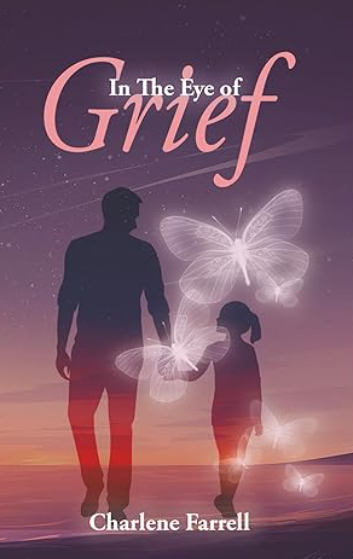
Grief is often spoken about in hushed tones misunderstood, rushed, or wrapped in expectations of “moving on.” In her deeply personal debut book, Charlene Farrell invites readers into a raw, unfiltered journey through loss, love, and learning how to live alongside grief.
Blending narrative writing with poetry, the book chronicles the first year after losing someone deeply loved, capturing not just the pain, but the slow, fragile process of coping. As a counselling psychologist and educationist based in Goa, Charlene brings both professional insight and lived experience into her writing. What emerges is not a guide on how to grieve, but a compassionate companion for anyone navigating loss.
In this heartfelt conversation, Charlene speaks openly about vulnerability, healing, her father’s lasting presence, and what it means to walk with grief rather than fight it.
Q1. Now that the book has been launched, how does it feel to see such a deeply personal journey shared with readers?
It’s exhilarating and at the same time daunting. It feels like I have let the world in to the most vulnerable side of me. At the same time, I finally feel like I can help more people than I have ever known, so it is a very dichotomous feeling.
“That mix of vulnerability and purpose is palpable. Sharing something this personal takes courage, and it’s clear that the intention to help others makes the fear worth facing.”
Q2. You’ve described this book as beginning as a therapeutic process. At what point did you realise your private healing could become a published work?
As I reread the pages, I could sense the pain in my chest transform. It didn’t go away; it just transformed from sheer physical pain to something with comprehension around the edges. As I got deeper into my story and as I read bits of it to friends who have lost, I realised that sometimes, all grief needs is a companion and the words in this book have been that for people I know.
“That idea of grief needing a companion rather than solutions is incredibly powerful and quietly reassuring.”
Q3. Grief is often difficult to put into words. What made poetry and narrative writing the right medium for expressing what you were going through?
As I wrote this book, I did not think about style and form. I just let the words, well actually in this case, feelings, flow. Before I knew it, I had an amalgamation that somehow sounded right. It reminded me of waves, the narrative bit being the troughs and the poetry the crests.
“That imagery of waves captures grief so accurately its rise and fall, its unpredictability, and its rhythm.”
4. As a counselling psychologist, you understand grief professionally, how was experiencing it personally different from knowing it theoretically?
I have done courses in bereavement counselling and nothing I learnt theoretically prepared me for what grief truly is. That’s one of the first things that occurred to me, “I have been doing a disservice by pretending to know” that was a thought that kept ringing in my head. There is no clear-cut stage, there are no sure fixes and there is no chronology. That discovery kicked me out of the shoes of a therapist in theory and grounded me in the emotion. It changed the way I planned all my interventions, not only bereavement. It thought me to never pretend that I understood.
“This honesty is striking. It challenges assumptions around expertise and highlights the humility grief demands from everyone.”
Q5. The book captures the first year after losing someone close. How was it for you to document that specific period of grief?
It was the hardest thing I’ve ever had to do. Reliving every moment was at first like digging into the wounds over and over again and just refusing to heal. As I kept writing, every memory, good or bad became like a healing stroke, a warm hug that assured me that I would be able to smile again. Sometimes, while writing I smiled and slowly the smiles stopped eliciting guilt. I was struggling with guilt, guilt of smiling and laughing and I felt it was tearing away at his memory.
“The way you speak about guilt especially guilt over smiling will resonate deeply with anyone who has loved and lost.”
Q6. I am sure there will be a moment during writing when the pain felt too heavy to continue, what helped you keep going?
There were plenty of moments that the tears were too blinding and the pain too sharp to carry on, but in those moments, I thought of my dad and how he endured through his pain. On many occasions I felt his warmth encouraging me on. It was those warm feelings that led to the completion of this book.
“That sense of continued presence feels incredibly tender almost as if love itself became the strength to finish the book.”
Q7. Your father’s illness and passing form the emotional core of the book. What do you hope readers understand about love and loss through your relationship with him?
From this book, I wish for readers to understand the humanness of loss and the complexity of relationships. We all beat ourselves up constantly but the only real constant in this life is love. At some point or another we are all going to experience love in some way and with that beautiful experience comes the flip side… LOSS. I want readers to know that grief is love in a new form. Each one of us will experience different types of grief, I believe I started grieving for my dad even before he passed. As he fell ill, I started grieving the strong man he was, the gregarious man I always had beside me and then when the moment finally came and the walls around me crumbled, I realised the magnitude of love and I would love readers to appreciate that love before it is taken away.
“Grief is love in a new form” is a line that stays with you long after reading it reframes loss with gentleness and meaning.”
8. This book speaks not only about grieving, but also about learning how to walk with grief. What does ‘living alongside grief’ mean to you today?
It means keeping my loved one with me, refusing to let him be just a memory. When someone plays such an important part in your life you hold on to them spiritually, all the while being grateful for them and to them, holding on and yet letting go, mourning their passing and yet thanking your lucky stars that you had them, it is walking along a path that is lined by the memories that your love has created and will forever accompany you as you go along.
“This feels less like closure and more like continuity a beautiful way of redefining what it means to live after loss.”
Q9. As someone who works closely with children and young adults, how has this experience changed the way you guide others through emotional pain?
I have become so much more purposeful in the way I approach situations. With clients I am more open to what they have to share. With people in general, I find it easier to identify the insincere. Evaluating behaviour has always been part of who I am but now, clarity is so much more.
“It’s clear that this experience didn’t just change your writing it reshaped the way you connect with people at every level.”
Q10. Many readers going through loss may pick up this book seeking comfort. What would you like them to feel when they reach the final page?
I want them to know that every emotion they are experiencing is valid. There is no right and wrong way to grieve, there is no timeline and there are no clear-cut stages. Just go with the emotions whatever they may be
“That permission to feel without judgment may be the most comforting message a grieving reader can receive.”
Q11. After turning your most devastating loss into art and healing, how has this journey changed you, both as a person and as a writer?
I could say that I am doing great and that I am all set for the next stage of my life but that would be a lie. I am still yearning for who I have lost, except now, I don’t feel as alone on this journey. I walk with everyone who has loved and lost and that is a comforting way to live post loss. The chapter on the signs too… I still look for and receive the signs and that has opened another area of research in my life.
“There’s something deeply comforting about this honesty it allows space for grief to exist without needing to be “over.”
Q12. This was your first time publishing a book, from turning deeply personal writing into a finished work shared with readers. How was your overall publishing journey?
It was a great experience. I am still learning the ropes and the jargon that accompanies it. I had no idea about publishing or marketing or anything that accompanies the process. ‘Paper towns’ and ‘Bookaholics’ made it so much easier. It really helps when you have good listeners and calm responders to work with on something as gruelling as this.
“Having the right support system seems just as vital in publishing as it is in healing and that comes through clearly here.”
Charlene Farrell’s book is not an attempt to explain grief or fix it. Instead, it offers presence quiet, compassionate, and deeply human. Through poetry and narrative, she reminds readers that grief doesn’t demand resolution, only acknowledgment.
This conversation leaves us with a gentle truth: loss changes us, but love remains. And sometimes, walking with grief rather than ahead of it is the bravest way forward.