













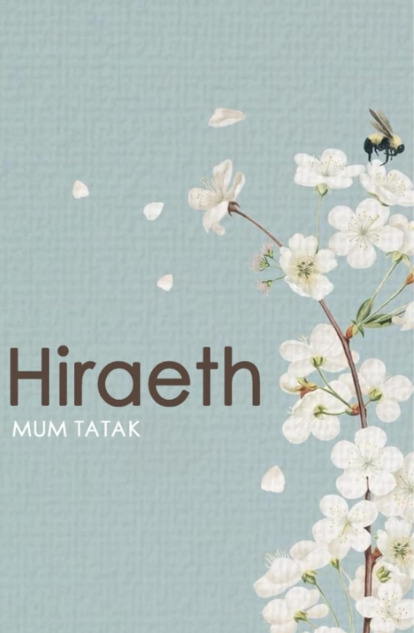
Some books feel less like stories and more like quiet confessions, and Hiraeth is one of them. Intimate, reflective, and deeply emotional, the collection explores longing, memory, silent love, and the ache of unspoken feelings.
In this conversation, the poet behind Hiraeth opens up about the meaning of the title, the vulnerability of sharing personal work, the process of writing poetry, and the journey from private pages to publication.
1. “Hiraeth” is such a haunting word. Why this as your title? What did it mean to you before the book, and what does it mean to you now?
Before the book, ‘Hiraeth’ was an unnamed ache I carried. An elusive longing I couldn’t pin down. And I feel somewhere that yearning reflected in my writing as well. When I stumbled upon the word by chance, it perfectly captured that yearning for a home that never was. There couldn’t have been a more perfect title for my book. Now, after writing this collection, Hiraeth isn’t just a title, it’s where my words finally belong.
“That’s beautifully said , almost as though the title didn’t just name the book, but gave language to emotions you had been carrying for years.“
2. As you also quote, and after reading, we realized that your poems feel like unsent letters.
Was there a moment you almost didn’t write something because it felt too personal?
Absolutely. There were moments when the intimacy of certain emotions whispered to stay quiet. Not because they were too private, but because honoring that intimacy was part of their beauty.
“There’s vulnerability in your words, but also a quiet dignity in what you choose to leave unsaid.“
3. This book speaks deeply about silent love and unspoken grief. Was this book at any point difficult to write?
Not really difficult. I never intended to publish it initially. It stayed personal for a long time. But my mother kept encouraging me to share it. Letting it out wasn’t easy, but now when people tell me they connected with it, I’m glad I did.
“It’s touching how something once deeply personal has now become a shared emotional space for so many”.
4. If Hiraeth had a soundtrack, what kind of music would it carry?
Hiraeth isn’t a cheerful tune but it isn’t depressing as well. The longing and remembrance I write about felt more like a quiet release. So, if Hiraeth did have a sound, I think it’d be something like “Hymn to the Sea” from Titanic. A little eerie yet strangely comforting.
“There’s a haunting stillness in both the music and your poetry – melancholic, yet comforting in an unexpected way”.
5. Every writer has a “this is why I write” moment. What was yours?
My moment is realizing I write to understand myself, not just to communicate with others. Writing frees me. From inhibitions, constraints, and especially in those moments when I feel suffocated.
“That honesty reflects strongly in your work. Your poems don’t feel written for performance , they feel written for survival, reflection, and release.“
6. What does your writing process actually look like? Are you disciplined, or do your poems arrive in chaos?
I’m not disciplined about when I write. My words need to flow naturally. But once they are out, I edit it thoroughly. Editing actually takes more time than writing for me. I often jot down the ideas that come to me or wake up with lines in my head. Then, after that free flow, I slow down and shape them.
“So the emotion arrives instinctively, and the craft follows carefully after.”
7. Which poem in the book was the hardest to let go of and why?
Honestly, the entire collection was difficult to release because every poem held a piece of my inner world, and letting them go felt like sharing something I had once kept private. I was also skeptical about using pronouns because I didn’t want my poems to be gendered. Letting go of that idea, to morph something so abstract into a fixed shape was also difficult.
“That tension between abstraction and specificity really adds depth to your poetry.“
8. If your next book had a working title right now, what would it be (even if it changes later)? Also, how soon can the readers expect it?
I’m working on another poetry collection, and while the title might change, right now I’m calling it Papercut, but the themes will take a different shape from Hiraeth. I think the readers will find a fresh kind of resonance. It’s in the works as of now. I’m excited for the readers to experience it when it’s ready.
“Papercut” already sounds intriguing – delicate, sharp, and quietly painful. “
9. As both an academic and a poet, how do you balance structure and emotion in your writing?
I don’t force emotions, it has to be genuine. That’s why I only write when inspiration strikes, which can be unpredictable and not too often. When I write, the poet in me handles the emotional flow, while the academic in me steps in during editing to shape structure and clarity.
“That duality is perhaps what makes your work feel both emotionally raw and thoughtfully refined at the same time.“
10. As an author, we are sure you must read a lot. What are 2–3 books you keep going back to, no matter how many times you’ve read them?
While plot matter, I’m drawn to the narrative journey. I keep returning to Tughlaq by Girish Karnad, no matter how many times. Recently, I was deeply moved by The Remains of the Day by Kazuo Ishiguro. And classics like Lord of the Flies and Animal Farm are forever favorites.
“That’s such an interesting mix of literature – introspective, political, and emotionally layered.”
11. How did your journey from writing poems to actually publishing a book unfold? Any tips for new poets who are planning to publish their book?
Publishing one’s work has become much more accessible today, especially with self-publishing options available. However, I think it is important to choose a publishing house that matches your needs and expectations. Approaching established publishers is always an option, though it can sometimes be uncertain and time-consuming.
For me, if the goal is simply to share your work with readers, self-publishing can be a good starting point. My own experience with self-publishing was straightforward.
For new poets planning to publish their work, I would say do your homework properly. Research well, understand what you want for your book, and find a publishing house that aligns with your vision and taste. Most importantly, don’t let hesitation stop you from taking the first step. Once you cross that hurdle, the process feels much less intimidating.
“That’s genuinely encouraging advice, especially for aspiring poets who often hesitate to share deeply personal work with the world”.
Some conversations stay with you long after they end, and this was certainly one of them. Through Hiraeth, the author reminds us that poetry doesn’t always arrive loudly , sometimes it exists in silences, unfinished thoughts, quiet longing, and emotions we struggle to name.
What makes this collection resonate so deeply is its honesty. Every answer reflected the same tenderness found within the poems themselves: thoughtful, introspective, and deeply human. From speaking about vulnerability and creative freedom to sharing the realities of publishing and artistic growth, the conversation offered readers a rare glimpse into the mind behind the words.
As the author now moves toward a new chapter with Papercut, one thing remains certain , their writing will continue to give language to emotions many of us quietly carry within ourselves.
If you’ve ever found comfort in quiet words and unspoken emotions, Hiraeth is a journey worth experiencing then grab your copies now.