













Some books begin with a clear idea, a planned theme, and the intention to become a finished collection. Others begin much more quietly with thoughts that need somewhere to go, emotions that are difficult to explain, and words written simply because they need to exist.
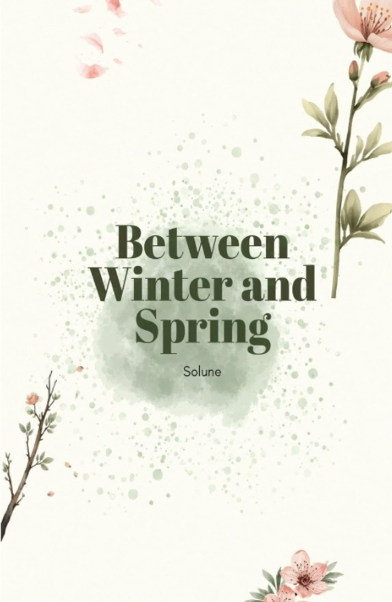
Between Winter and Spring is one such collection.
What began as a personal way of expressing feelings gradually became a collection of poems connected by emotions, experiences, loneliness, healing, and hope. Moving through themes of longing, winter, becoming, home, and spring, the collection reflects an emotional journey that many readers may recognize within their own lives.
In this conversation, we explore how the poems came together, what poetry offered during difficult moments, the transition from Hindi and Gujarati to English, and what it means to finally let deeply personal writing enter the world as a book.
Q1. You mention that this collection was “never originally meant to become a book.” At what point did you realize these poems belonged together as one project?
Honestly, in the beginning, writing poems was simply my way of letting out feelings that I wasn’t able to share or explain to anyone. I wasn’t writing with the intention of creating a book.
Later, I started noticing how many of the poems were connected to one another some through emotions, some through experiences, and some through the ideas they explored. Once I saw those connections, I began organizing them and trying to give them a proper structure. That was when I first thought, perhaps these poems could become a book.
“It is interesting that the book emerged naturally rather than from a plan And perhaps that personal beginning is what gives the collection its emotional honesty.”
Q2. Some poems came together in minutes, while others took much longer to shape. What made certain emotions or moments harder to put into words than others?
I think, surprisingly, the simplest feelings were often the hardest to put into words.
Complex emotions can sometimes give you many things to write about, but simple feelings are much harder to capture without overcomplicating them. The challenge was finding a way to express something simple while still making it feel poetic and relatable to someone else.
“That distinction between feeling something deeply and finding the right words for it is fascinating And when we look at the collection as a whole, there is also a clear emotional movement within it.”
Q3. The collection follows an emotional arc, from searching for love, through loneliness, and eventually toward hope. Did you write these poems in that order, or did you arrange them this way afterward?
I didn’t write the poems in any particular order. They were written at different points in my life and often in response to completely different moments or emotions.
It was only later, when I looked at them as a collection, that I realized they naturally seemed to follow an emotional flow. That’s when I started arranging them into the five parts-Longing, Winter, Becoming, Home, and Spring to reflect that journey.
“So the emotional journey was something you discovered after the poems had already been written. That makes the structure feel almost like a reflection of the journey itself.”
Q4. Many people struggle to put pain into words. What is it about poetry, specifically, that made it possible for you to express things you couldn’t otherwise?
Poetry gives me freedom.
I don’t have to explain everything logically. I can take an emotion, an image, a memory, or even a single moment and turn it into something that doesn’t necessarily need a complete explanation.
When I was going through difficult times, there were feelings I couldn’t say to another person. But I could write them down. Sometimes a few lines could say what I couldn’t say in an entire conversation.
For me, poetry became a safe place where I didn’t have to hide, pretend to be strong, or worry about being misunderstood.
“That idea of poetry as a safe place comes through very strongly And within a collection built around such personal emotions, there is often one piece that captures the heart of the entire journey.”
Q5. Is there one poem in this collection that feels like the emotional center of the whole book?
If I had to choose one, I would probably say “A Gift in Goodbye.”
It is one of the later poems I wrote, and it helped me understand something that I hadn’t been able to understand earlier in my life.
A lot of my earlier poems are about wanting someone to save me, heal me, or bring warmth back into my life. A Gift in Goodbye looks at that differently. It acknowledges that another person can love us deeply, but they cannot do our inner healing for us.
For me, that realization represents an important shift in the journey of the book—from looking for healing outside myself to understanding that some healing has to happen within.
“That sounds like a significant turning point not necessarily because the pain disappeared, but because your relationship with that pain changed.”
Q6. Looking back at the earliest poems in the book compared to the later ones, how much had you changed or healed between writing them?
Quite a lot, although I wouldn’t say I’m completely healed.
The earlier poems often come from a place of wanting something outside myself to make things better—love, another person, a particular future, or a particular outcome.
The later poems became more introspective. I started asking myself what I could change within myself, what I could learn from what happened, and how I could continue moving forward even when I didn’t have all the answers.
So I think the biggest change wasn’t that the pain disappeared. It was that I learned to carry it differently.
“I learned to carry it differently” feels like an important way of describing healing.
Q7. You began writing in Hindi and Gujarati before eventually finding your voice in English. What was that transition like, emotionally and creatively?
Hindi and Gujarati were the languages in which I first learned to express my emotions through writing. They felt very natural to me because they were the languages I grew up with.
English came later. Initially, writing poetry in English felt less natural, but gradually I started finding a different voice in it.
I still enjoy writing in all three languages, which is why I kept a few Hindi and Gujarati poems in their original form in the collection, alongside their English versions. I didn’t want to completely separate the person who started writing in those languages from the person who eventually wrote this book in English.
“Keeping those original poems sounds like a way of preserving where the journey began”
Q8. What first drew you to writing during your high-school years? Was there a specific moment that pushed you toward it?
I don’t think there was one particular moment.
I was simply someone who spent a lot of time inside my own thoughts. Writing became a way to give those thoughts somewhere to go.
In high school, I mostly wrote in Hindi and Gujarati. At that time, I wasn’t thinking about becoming an author. I wasn’t even thinking about publishing anything. I was just writing because I enjoyed it and because it allowed me to express things that were difficult to say aloud.
I think that is still the reason I write today.
“It is remarkable how something that began simply as a way of expressing yourself eventually became a book that other people can find themselves in. That brings us to the readers who may now be carrying their own version of a “winter.”
Q9. For someone going through their own “winter,” what would you want them to take away from reading this collection?
More than anything, I hope they feel that they are not alone.
There were times when I felt lost, disconnected, and unsure whether things would ever feel warm again. During those moments, reading someone else’s words and realizing that another person had felt something similar gave me a sense of comfort.
I hope my poems can offer that same small feeling of companionship to someone else.
And I hope they remember that winter, no matter how long or harsh it feels, is still a season. It doesn’t last forever.
Sometimes, you just have to keep walking through the cold until you reach spring.
“That idea of continuing to walk until spring captures the spirit of the collection beautifully. Finally, after such a personal writing journey, there is another journey that begins when the poems leave the writer’s hands and become a published book.”
Q10. How has your journey of bringing this book to readers with Paper Towns Publishers been, and what has the experience taught you as an author?
Bringing this book to life has been very different from simply writing poems.
For years, writing was something private. Turning those personal thoughts into a real book meant making decisions about editing, arrangement, design, formatting, publishing, and eventually allowing other people to read something that was once only mine.
Working with Paper Towns Publishers has helped me understand how many steps exist between having a collection of poems and actually creating a book.
Most importantly, the process has taught me that becoming an author isn’t just about writing. It is also about having the courage to let your work leave your hands and exist in the world on its own.
And for someone who never intended to write a book in the first place, that has been quite a journey.
“That is a beautiful way to look at the publishing journey. Writing may begin as something personal, but publishing requires you to trust your work enough to share it with the world and It seems like that transition has been one of the biggest lessons for you.”
From poems written simply to release feelings to a complete collection that now carries those emotions to readers, Between Winter and Spring is a story of more than just writing. It is a story of understanding oneself, learning to carry pain differently, and slowly discovering that difficult seasons do eventually change.
The collection reminds us that healing does not always mean forgetting what hurt us. Sometimes, it means understanding it, carrying it differently, and continuing to move forward.
And perhaps that is what makes the journey from winter to spring so meaningful not that the cold never existed, but that we kept walking until we found warmth again.
Step into the world of Between Winter and Spring – grab your copy and experience the emotions woven into every poem.