











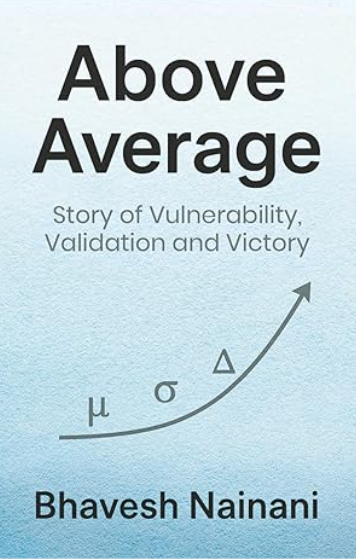
In a world obsessed with benchmarks, comparisons, and constant evaluation, the idea of being “above average” carries both promise and pressure. Above Average, the debut novelette by Bhavesh Nainani, PMP, dives deep into this tension exploring ambition, vulnerability, setbacks, and the quiet search for self-worth that spans decades of a man’s life.
Drawing from his professional background in project management and his personal love for storytelling, philosophy, and Hindi poetry, Bhavesh brings a rare balance of structure and sensitivity to his writing. In this conversation, he reflects on the origins of Above Average, the emotional labor behind its creation, and the questions he hopes readers will carry long after the final page.
Q1. Congratulations on the release of Above Average! What first sparked the idea of exploring self-worth through the lens of ambition and societal pressure?
Ans: The idea was sparked by my own journey and by watching others constantly strive to measure up. Ambition can motivate us, but it also brings anxiety when society defines success so narrowly. Most people want to be ‘above average’ in some way, and that pursuit leads to interesting stories. I wanted to explore how chasing validation shapes our sense of self-worth.
“That tension between motivation and anxiety feels deeply familiar especially in environments where success is constantly quantified”
Q2. The title, Above Average, is simple yet provocative. At what point in the writing process did it become clear that this would be the name of the book?
Ans: The concept was always about striving to be better than ordinary, so “Above Average” naturally came to mind. Once the draft was ready, I thought about a title that captured the central theme being just a bit ahead of most. Ideas like chasing excellence or standing out fit the story, but the simple goal of being ‘above average’ was at its core.
“Sometimes the most powerful titles are the simplest and this one instantly invites readers to question what “above average” truly means”
Q3. Coming from a structured, analytical field like project management and ERP systems, what was it like shifting into the emotional and intuitive world of fiction writing?
Ans: From the beginning, I’ve always been drawn to philosophy and the study of human behaviour. Even while working in structured, analytical fields, I wanted to write about what drives people emotionally. Shifting to fiction felt natural it gave me space to explore the intuitive side of ambition and self-worth.
It was a refreshing change, letting me blend logic with the complexities of human experience.
“That blend of logic and emotion seems to mirror the book itself strategic in structure, yet deeply reflective in spirit”
Q4. Many authors say their first book teaches them who they are. What did Above Average teach you about yourself?
Ans: Writing my first book taught me I needed much more patience than I expected. It pushed me to plan and schedule my time better, balancing writing with everything else. I had to slow down, reflect, and make sure each scene fit the bigger picture. Overall, it was a rewarding process blending careful organization with creativity and thoughtfulness.
“It’s interesting how the discipline of writing can mirror life itself requiring patience, balance, and trust in the larger journey”
Q5. With your deep experience in mentoring and building teams, what message do you hope young professionals take away from this book?
Ans: Life is a journey of validation at every step, and real growth happens when we accept this truth and keep learning. It’s important to be innovative, treat setbacks as lessons, and never let envy or jealousy cloud our perspective. Victory often requires sacrifice, and we shouldn’t judge teammates by their struggles or abilities. Above all, progress comes from embracing challenges, improving ourselves, and supporting others along the way.
“That message feels especially relevant in today’s competitive workplaces,where collaboration and empathy are just as critical as performance”
Q6. Now that Above Average is complete and ready for readers, what questions or realizations do you imagine will stay with readers long after they close the last page?
Ans: I imagine readers will wonder how much of their own journey is shaped by small choices and unexpected setbacks. They might reflect on the role of vulnerability and humility in personal growth, beyond just chasing success. The story could prompt questions about how we treat others whether we judge, support, or compete with them. Above all, I hope it leaves readers thinking about what truly matters: not just achievement, but the meaning behind each step.
“Those lingering questions are often what make a story stay with us long after it’s finished”
Q7. Since your work explores the internal stories we construct about ourselves, what story do you think most people carry about being average or extraordinary?
Ans: Most people, when they feel average, get frustrated and may retreat instead of working to improve or explore new things. Sometimes, though, that feeling can spark a drive to achieve more and push beyond limits. It’s important to find a balanced approach accept where you are, but stay open to growth and new experiences. Ultimately, being ‘average’ isn’t a failure but a starting point for learning, innovation, and personal progress.
“Reframing “average” as a beginning rather than a verdict is a powerful shift one many readers will likely find reassuring”
Q8. Did any real setback, failure, or turning point in your own journey influence the emotional tone of the book?
Ans: Yes, real setbacks and turning points in my own journey definitely shaped the emotional tone of the book. Facing failures taught me resilience, and the importance of adapting when plans go off track. Those experiences made me more honest in my writing, especially about vulnerability and bouncing back.
“That honesty often resonates most with readers because it reflects experiences we rarely talk about openly”
Q9. Which section of the manuscript demanded the greatest intensity, revision, or emotional investment from you during the writing process?
Ans: The earthquake chapter demanded the greatest emotional investment from me, as it was based on my personal experience. Capturing the shock, vulnerability, and the way life changed after that event was both intense and challenging. Writing it required revisiting difficult memories and making sure the emotions felt honest and real. That section stands out as the most powerful and emotional part of the manuscript for me.
“Personal moments like these often become the emotional anchors of a story and readers can usually feel that authenticity”
Q10. What makes Above Average different from other books that deal with ambition, success, and self-worth?
Ans: I wouldn’t want to compare my work to others, but Above Average is written to resonate with anyone, regardless of background. The characters are relatable, and I’ve tried to bring out genuine human emotions struggle, respect, envy, love, fear and sacrifice in this story. It’s about capturing the everyday realities and complexities we all face, not just the pursuit of success. My hope is that readers see themselves in these moments and find meaning in the shared human experience.
“That universality the idea that ambition and doubt cut across backgrounds is what makes stories like this deeply relatable”
Q11 Would you say this is a book meant to inspire readers, provoke them, comfort them, or hold up a mirror?
Ans: My main aim is to inspire readers to embrace their vulnerabilities and develop genuine self-awareness. I hope the story provokes thoughtful reflection about what drives us and how we respond to life’s challenges. It’s not just about comfort or motivation it’s about encouraging honest introspection and growth.
If Above Average helps readers see themselves more clearly and accept their own journey, that’s the best outcome I could hope for.
“Holding up a mirror can be one of the bravest and most meaningful things a book can do”
Above Average is not just a story about ambition or success it’s a quiet, reflective exploration of what it means to measure oneself in a world that never stops measuring. Through vulnerability, setbacks, and self-examination, Bhavesh Nainani invites readers to reconsider where real victory lies.
For anyone who has ever felt the pressure to be more, do more, or prove their worth, Above Average offers something rare: not easy answers, but honest questions and the space to find your own meaning within them.