














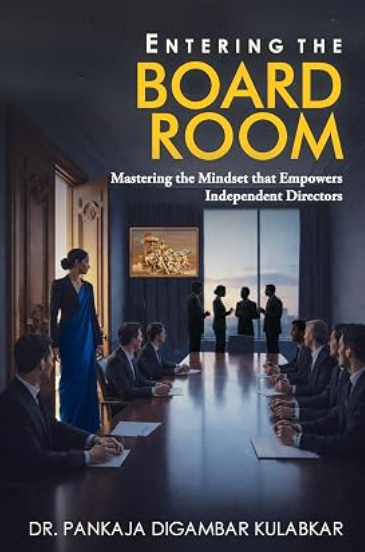
Leadership is often associated with authority, decision-making, and executive power. Yet, some of the most influential leaders operate without directly controlling outcomes. Independent directors occupy exactly this space they guide, question, and influence while remaining objective custodians of good governance.
In Entering The Boardroom, the author explores this unique responsibility through conversations with some of India’s most respected independent directors. Written in an engaging dialogue format inspired by the timeless wisdom of the Bhagavad Gita, the book draws a compelling parallel between Lord Krishna’s role as a guide to Arjuna and the role of independent directors in helping organizations uphold integrity, accountability, and long-term vision.
In this exclusive interview, we speak with the author about the inspiration behind the book, the misconceptions surrounding independent directorship, the lessons learned from industry veterans, and why this conversation is more relevant than ever.
Q1. What inspired you to write Entering The Boardroom, and why did you feel this conversation around independent directors was important today?
The book ‘Entering the Boardroom’ is a dialogue. A dialog between aspirant independent directors and seasoned independent directors. There are many advertisements in the social media about institutes preparing one to become Independent Directors. While there are many takers for these courses, the question is how should one prepare oneself mentally for the position.
I believe that an effective way to learn is to talk to those who walk the path. And i decided to interview independent directors. These are seasoned independent directors and i knew that the learning would be great. Why not then share the learning with others by writing a book? This is how the book was born.
“That’s an important distinction and While certifications can open doors, your book highlights that developing the right mindset and learning from real-world experiences is what truly prepares someone for the boardroom.”
Q2. The comparison between Krishna guiding Arjun and independent directors guiding organizations is both unique and powerful. How did this idea take shape?
Dialog is a powerful tool in bringing forth ideas. It was during the discussions with my book coach that this idea took a form shape. You have ideas and you may wonder whether the idea makes any sense and you need validation. Heena liked the idea and encouraged me to go ahead. This gave me the confidence that the idea will work.
“It’s fascinating how a simple conversation evolved into the defining narrative of the book.”
Q3. What was the biggest misconception about independent directors that you wanted this book to challenge?
There are several misconceptions. The chief among them is that just doing a certification gives you an entry into the board. Those aspiring to become independent directors will get insights into what it takes to become an independent director and what it takes to become a good independent director.
“That’s a valuable perspective. The journey clearly extends beyond qualifications and into the qualities, mindset, and responsibilities that define an effective independent director.”
Q4. Your book combines practical governance insights with a Bhagavad Gita-style narrative. What inspired this storytelling approach?
As a Toastmaster and a student of storytelling, I look for a storyline to convey effectively. It was a struggle until I this approach dawned.
“Storytelling approach certainly gives the readers a memorable way to absorb governance lessons.”
Q5. What does being an “effective independent director” truly mean beyond titles and corporate responsibilities?
When you are in a job, you are recognized for your initiatives. The recognition may come in the form of promotion and rewards.
Being an independent director is not a job.You don’t get promotions. There are rewards, but different from what you get in a job. As you read thoughts of effective independent directors, you will get insights into what being effective independent director means.
“That’s a refreshing way to look at the role. It emphasizes purpose and contribution over designation, reminding readers that true impact isn’t always measured by promotions.”
Q6. How can independent directors build trust within a company while still maintaining objectivity and accountability?
Some of the independent directors interviewed in the book have decades of experience of being independent directors. Building trust with the company’s executives is critical for getting the information you seek so that you can be effective. At the same time, veterans like Prod Ashok Korwar and Pradip Dubhashi will tell you how equally important it is to maintain a distance.
“Striking that balance between trust and independence seems to be one of the defining challenges of the role, and it’s valuable to learn from those who have successfully navigated it over the years.”
Q7. Did working on Entering The Boardroom change your own understanding of leadership and influence?
Yes. When you talk to experts, you learn what you don’t get from textbooks. What I learned is applicable in the space of independent directors and beyond.
“That beautifully reflects the value of lived experience. Some of the most meaningful leadership lessons come from conversations rather than classrooms.”
Q8. How did you balance making the book insightful for experienced directors while still accessible for aspiring professionals?
What the independent directors shared in the book is from their experience. The intention was to help readers. When you are authentic and have the right intention, the results are much more impactful that you had envisaged.
“Authenticity certainly comes through in the book, making it relevant for readers regardless of where they are in their professional journey.”
Q9. If readers take away one core lesson from the book, what would you hope it is?
Each one takes away based on where they are and what they are looking for. One thing is certain. Regardless of whether you are a student or professional, you will get insights to perform better.
“That’s perhaps the hallmark of a meaningful book offering lessons that resonate differently with every reader while remaining universally relevant.”
Q10. How has your journey of bringing Entering The Boardroom to readers with Paper Towns India been, and what has this experience meant to you personally?
This is my first experience of working with PaperTowns. I am already thinking of PaperTown for my next book.
“That’s wonderful to hear. A positive publishing experience often lays the foundation for many more stories to reach readers.”
Entering The Boardroom is more than a guide to corporate governance—it’s a thoughtful exploration of leadership, influence, and the mindset required to serve with integrity. By bringing together the wisdom of accomplished independent directors through an engaging conversational format, the book offers practical lessons that extend far beyond the boardroom. Whether you’re an aspiring independent director, an experienced board member, or simply someone interested in leadership and governance, this book provides perspectives that encourage reflection, informed decision-making, and continuous growth.
Discover timeless leadership lessons with Entering The Boardroom.