













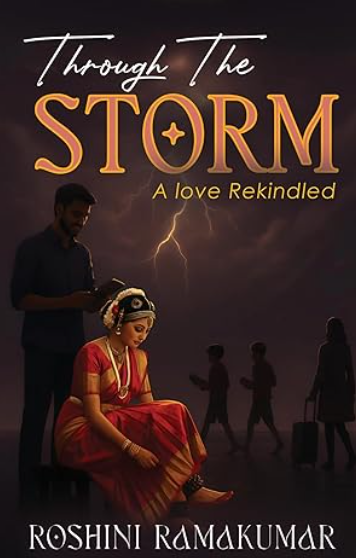
Love rarely follows a straight path. It bends, breaks, pauses, and sometimes finds its way back through silence and sacrifice. In Through the Storm: A Love Rekindled, author Roshini Ramakumar explores this very journey through the lives of Vijay and Tara two people bound by love, tested by time, and reshaped by life’s unpredictable storms.
Known for her emotionally honest storytelling and nuanced portrayal of human relationships, Roshini’s fourth novel dives deep into evolving love, personal growth, and the quiet resilience that keeps hearts connected. In this candid conversation, she opens up about her inspiration, writing process, emotional challenges, and what she hopes readers carry with them long after the final page.
Q1. What inspired the story of Through the Storm, and how did the journey of Vijay and Tara begin in your mind?
Through the Storm was inspired by a simple but lingering question: what happens to love when life doesn’t go the way we plan? Vijay and Tara began in my mind as two ordinary people with big dreams, fears, and emotional baggage. Their story didn’t start as a dramatic romance but as a quiet, honest connection built through conversations, misunderstandings, and shared ambitions. From the beginning, I knew this wouldn’t be a story about avoiding storms, but about learning how to live and love through them.
“That sense of “ordinary love” immediately grounds the story in reality. It feels less like a fantasy romance and more like something readers might recognize from their own lives which makes the emotional impact even stronger.”
Q2. The novel beautifully shows how love changes over time. What did you want to explore about the evolution of relationships through this story?
I wanted to explore how love evolves as people grow. Love isn’t constant it changes with responsibilities, failures, compromises, and time. In Vijay and Tara’s relationship, love moves from excitement to endurance, from romance to responsibility. I wanted to show that love doesn’t fail just because it struggles. Sometimes, love matures by learning patience, understanding, and acceptance rather than grand gestures.
“This perspective challenges the idea that love must always feel intense to be real.”
Q3. Vijay and Tara grow individually before finding their way back to each other. What does personal growth mean to you in the context of love?
Personal growth in love means not losing yourself while loving someone else. Vijay and Tara had to face their own fears, ambitions, and insecurities before they could truly choose each other again. I believe love works best when two complete individuals come together, not when one person becomes the reason for the other’s existence. Growth brings clarity, and clarity makes love stronger.
“This idea of choosing love again, rather than clinging to it, feels especially powerful.”
Q4. This is your fourth novel. How has your writing voice evolved from your earlier books to this one?
With Through the Storm, my writing has become quieter and more emotionally aware. Earlier, I focused more on events and plot. This time, I leaned into inner emotions, silences, and unsaid thoughts. I’ve learned to trust subtlety and allow emotions to unfold naturally. This novel reflects a more mature voice one that understands that sometimes the strongest moments in a story are the quietest ones.
“That maturity is palpable. The pauses, silences, and internal reflections often speak louder than dramatic twists and they linger with the reader.”
Q5. Now that the book is out, what do you hope readers feel or reflect on after finishing Through the Storm: A Love Rekindled?
I hope readers feel seen and understood. I want them to reflect on their own relationships and realize that love doesn’t have to be perfect to be meaningful. I hope the book leaves them with a sense of hope—that even after heartbreak, confusion, and distance, healing is possible and love can find its way back in unexpected forms.
“That sense of being “seen” is something many readers crave, and your story seems to offer that emotional reassurance without romanticizing pain.”
Q6. After exploring love, loss, and rediscovery in this book, what themes are you most drawn to writing about next?
After Through the Storm, I’m interested in exploring a different genre, particularly thriller. I want to challenge myself by working with tension, psychology, and unpredictability. Even in a thriller, I’m drawn to stories driven by emotions and human complexity where suspense comes not just from events, but from people, their secrets, and their inner conflicts.
“That emotional depth paired with a thriller format sounds intriguing. It feels like a natural evolution rather than a complete shift.”
Q7. Can you describe your overall writing process, from the first draft to the final manuscript?
I usually begin with the climax. I know where the story needs to end emotionally, and from there I write backwards. My first draft is very instinctive I write without controlling my emotions or worrying about structure. I let the characters guide me, even if the writing becomes messy or intense. Later, during revisions, I focus on shaping the story, refining emotions, and creating balance between structure and honesty.
“Starting with the emotional end point explains why the story feels so emotionally cohesive. It’s fascinating how instinct plays such a big role in your first drafts.”
Q8. As this novel explores evolving relationships and inner emotions, what difficulties did you encounter during the writing phase, and how did you overcome them?
The biggest challenge was emotional honesty. Writing about fading love, emotional distance, and rediscovery required me to sit with uncomfortable emotions. At times, the story felt too real. I overcame this by allowing vulnerability into the writing process and reminding myself that authenticity is what truly connects a reader to a story.
“That willingness to sit with discomfort often separates a heartfelt story from a superficial one and it clearly paid off here.”
Q9. From manuscript development to the final release, how would you describe your publishing journey for this book, and was it different from your previous books?
This publishing journey was more personal and emotionally demanding than my previous ones. I was more involved in every stage, more particular about details, and more connected to the story. It felt less like releasing a book and more like letting go of a part of myself, which made the experience both challenging and deeply fulfilling.
“That sense of “letting go” really captures what this book seems to represent not just a story, but a piece of lived emotion.”
Q10. The story balances heartbreak with hope. How did you ensure the emotional intensity never overshadowed the message of healing?
I constantly reminded myself that the story was not about pain, but about what comes after pain. Every moment of heartbreak is followed by growth, reflection, or resilience. Healing doesn’t erase scars; it teaches us how to live with them. By giving the characters space to grow and choose again, I ensured that hope remained at the heart of the story.
“That balance is one of the book’s greatest strengths. The hope feels earned, not forced and that makes it deeply resonant.”
Through the Storm: A Love Rekindled is more than a love story it’s a quiet meditation on growth, endurance, and the courage it takes to choose love again. Through this conversation, Roshini Ramakumar reveals the emotional honesty and intentional craft behind the novel, offering readers not just a story, but a mirror to their own relationships and resilience.
As readers turn the final page, they’re left with a gentle reminder: storms may change us, but they don’t have to break us. Sometimes, they guide us back home.